It’s completely normal for newborns to have soft body hair, known as lanugo, and it usually fades on its own within a few weeks to months. While traditional remedies like rubbing besan or turmeric are often suggested, they aren’t necessary and can irritate a baby’s delicate skin. Trying to remove this hair may cause redness, rashes, or even infection. The best approach is to leave it alone and focus on gentle skincare, mild cleansing, light oil massage, and keeping the skin clean. Trust the natural process, as this temporary hair will disappear without any treatment.
Many new parents notice soft hair on their baby’s back, shoulders, or forehead and immediately wonder if something is wrong. In pediatric clinics across India, one of the most common early questions parents ask is why newborn babies have body hair and whether it should be removed.
Family members often suggest traditional remedies such as rubbing the baby’s skin with besan, turmeric paste, or dough balls to remove this hair. These practices are usually shared with good intentions. However, they are medically unnecessary and can irritate a newborn’s delicate skin.
Medical research and pediatric observations show that visible body hair in newborns is extremely common, particularly in premature babies. Clinical data suggests that nearly 30 percent of newborns may have visible lanugo, a fine, soft hair that naturally sheds within the first few months of life.
Parents also worry whether the hair will grow thicker later or whether baby body hair removal is required. The reassuring reality is that this hair is temporary and protective. Attempting to remove it can cause skin irritation, redness, and increase the risk of infection.
Understanding the science behind newborn body hair helps parents move beyond outdated beliefs and focus on safe, evidence based care that supports healthy infant development.
For a quick and helpful explanation, watch this Instagram reel:
Why Newborn Babies Have Body Hair
Understanding Lanugo – A Normal Part of Development
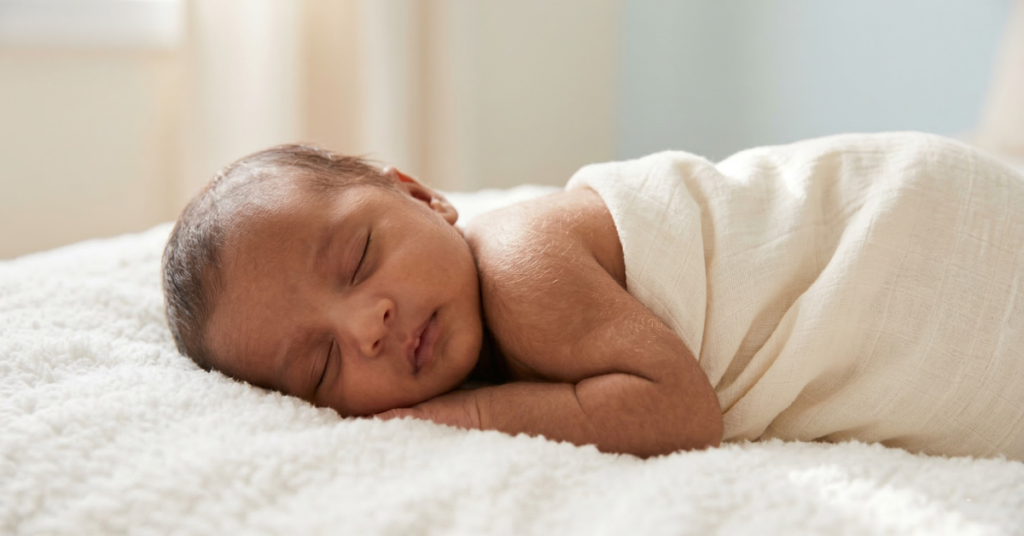
The fine hair seen on many newborns is medically known as lanugo. It develops during pregnancy and plays an important role before birth.
Lanugo helps the white protective layer called vernix caseosa adhere to the baby’s skin. This natural coating protects the skin from prolonged exposure to amniotic fluid and also supports temperature regulation inside the womb. Both lanugo and vernix are temporary and part of normal fetal development.
When Does Lanugo Appear During Pregnancy?
Lanugo usually begins to appear between 16 and 20 weeks of pregnancy. As the baby grows, this fine hair spreads across the body, including the back, shoulders, forehead, and sometimes the ears. In many cases, a portion of this hair sheds before birth. However, some babies are born with visible lanugo that gradually disappears after delivery.
Why Some Babies Have More Visible Hair
The amount of visible body hair can vary from one newborn to another. Parents may notice more hair in certain situations, such as when the baby is born prematurely, when genetic hair patterns run in the family, or when the vernix coating has recently washed off after birth, making the fine hair more noticeable.
These variations are completely normal and do not indicate a medical concern.
Baby Body Hair Removal Myths Still Common in Many Indian Homes
In many households, elders recommend different methods believed to reduce body hair in babies. These suggestions usually come from tradition and family experience rather than medical evidence.
Common Practices Pediatricians See in Clinics
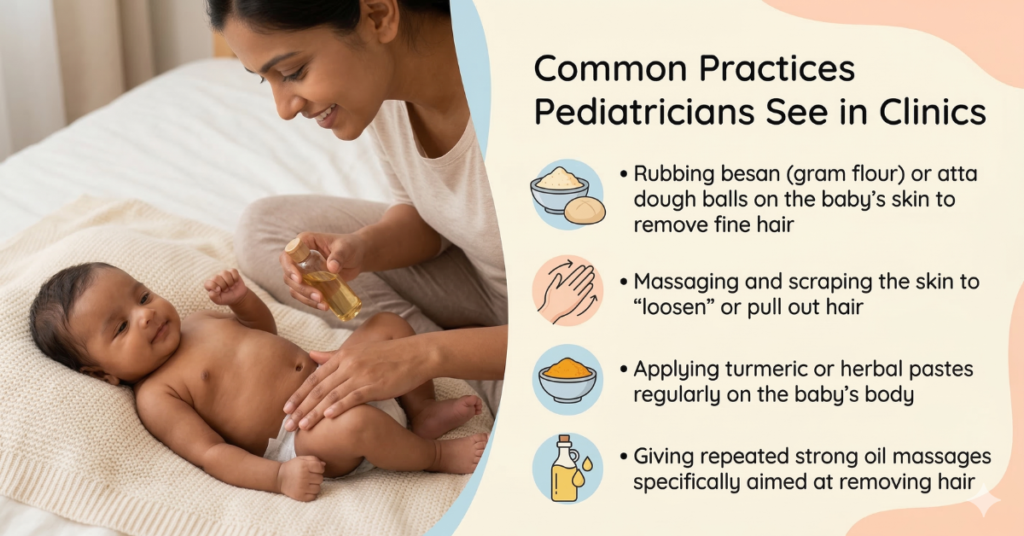
Parents often mention several traditional methods that are believed to remove newborn body hair. These practices are widely shared in families but are based on myths rather than medical evidence. Common examples include:
• Rubbing besan (gram flour) or atta dough balls on the baby’s skin to remove fine hair
• Massaging and scraping the skin to “loosen” or pull out hair
• Applying turmeric or herbal pastes regularly on the baby’s body
• Giving repeated strong oil massages specifically aimed at removing hair
A Real Consultation Scenario
During clinic visits, parents sometimes bring infants with red rashes, peeling skin, or small irritated patches. When discussing the baby’s skincare routine, many reveal that gram flour paste or similar mixtures were rubbed on the skin to remove body hair following advice from relatives.
After examination, the problem is usually not related to body hair at all. In most cases, the irritation is caused by repeated rubbing or friction on sensitive newborn skin rather than any underlying medical issue.
Should You Remove Newborn Body Hair? What Pediatricians Recommend
Parents often ask a direct question: Should newborn body hair be removed?
The clear medical answer is no.
Why Removing Baby Body Hair Is Not Recommended
Newborn skin is extremely delicate and still developing. Any repeated rubbing or scraping can damage this sensitive skin. Attempts to remove baby body hair may lead to:
• Skin irritation
• Small cuts or abrasions
• Allergic reactions
• Bacterial infections
Because of these risks, pediatricians generally advise against any form of forced baby body hair removal.
The Hair Is Temporary
Lanugo is not permanent hair. It is a soft, temporary hair that naturally sheds as the baby grows. In most babies, it gradually disappears within the first few weeks or months after birth without any treatment.
Genetics Determines Future Hair Growth
Hair thickness, density, and growth patterns are largely determined by genetics. Early childhood practices do not influence how hair grows later in life. Removing newborn body hair does not make future hair thicker, thinner, or slower growing.
Risks of Trying to Remove Baby Body Hair
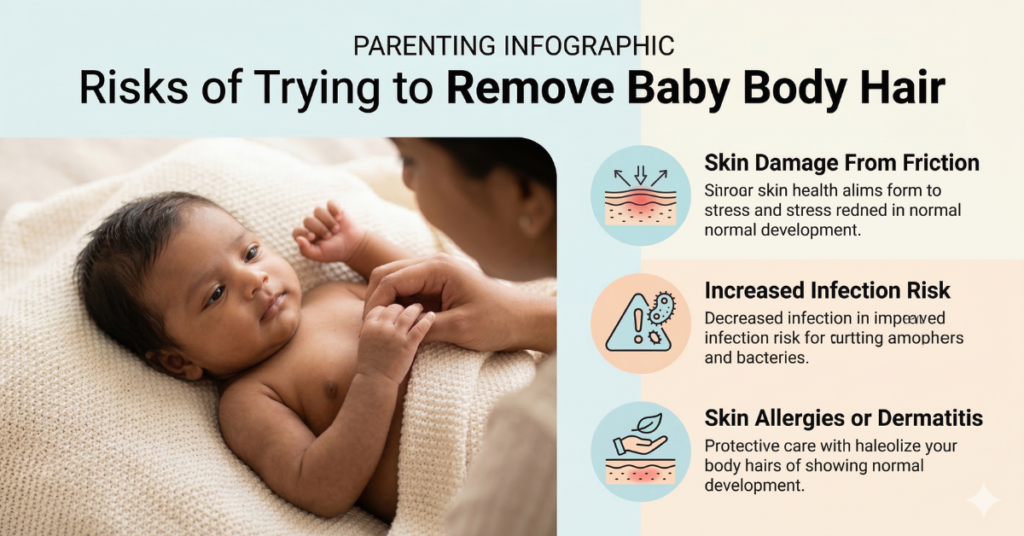
Parents usually try these methods with good intentions, but they can unintentionally damage a newborn’s natural skin barrier. A baby’s skin is thin, sensitive, and still developing, which makes it vulnerable to irritation and injury.
- Skin Damage From Friction
Practices such as rubbing flour mixtures, scrubbing with cloth, or applying strong pressure during massage create friction on delicate skin. This friction can lead to redness, peeling, and surface irritation.
- Increased Infection Risk
Even small abrasions or tiny cuts can allow bacteria to enter the skin. In newborns, this may lead to localized infections that sometimes require medical treatment.
- Skin Allergies or Dermatitis
Substances such as turmeric, oils, or herbal pastes may trigger irritation in sensitive newborn skin. Some babies develop allergic reactions or dermatitis when exposed to these ingredients, especially if applied repeatedly.
What Happens to Newborn Body Hair Naturally
Parents often worry that the visible hair will remain permanently. In reality, newborn body hair follows a natural shedding process as the baby grows.
Natural Hair Shedding in Babies
As babies grow and their skin continues to mature, lanugo gradually sheds on its own. This process happens naturally without any treatment or intervention. The baby’s normal hair growth cycle slowly replaces this temporary hair.
Timeline Parents Can Expect
Most babies follow a predictable pattern of natural shedding:
• Hair usually begins to shed within a few weeks after birth
• In many infants, it disappears completely within 2 to 6 months
• Premature babies may take slightly longer for the hair to shed fully
Safe Skin Care for Newborns
Instead of focusing on baby body hair removal myths, pediatric care emphasizes protecting and maintaining the newborn’s delicate skin barrier. Simple, gentle routines are usually all that is needed.
Gentle Skin Care Practices
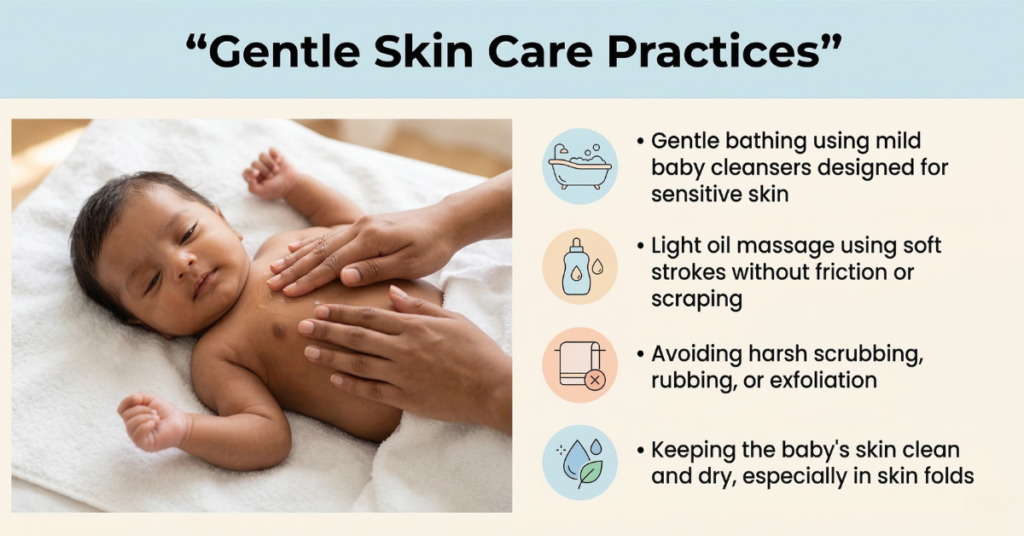
Recommended newborn skin care includes:
• Gentle bathing using mild baby cleansers designed for sensitive skin
• Light oil massage using soft strokes without friction or scraping
• Avoiding harsh scrubbing, rubbing, or exfoliation
• Keeping the baby’s skin clean and dry, especially in skin folds
These practices support natural skin development without causing irritation.
Focus on What Truly Matters
Parents benefit more from focusing on aspects that directly support healthy development, such as:
• Proper nutrition for steady growth
• Adequate breastfeeding or appropriate feeding routines
• Soft, comfortable clothing that does not irritate the skin
• Bonding through touch, eye contact, and responsive caregiving
Time spent nurturing and caring for the baby matters far more than worrying about temporary body hair, which naturally disappears as the baby grows.
When Should Parents Speak With a Pediatrician?
Newborn body hair itself is not a medical concern. However, parents should seek medical advice if certain skin changes appear. Early evaluation helps rule out irritation, infection, or allergic reactions.
Consult a pediatrician if you notice:
• Persistent skin redness
• Signs of infection such as warmth, tenderness, or pus
• Severe rashes after applying home remedies
• Skin swelling or unusual discharge
A pediatrician can examine the baby’s skin, identify the cause of irritation, and recommend safe treatment if needed.
At Vivasvan Parekh Child Care Clinic, these concerns are frequently discussed during early newborn visits. In most cases, reassurance and guidance about normal development and gentle skin care are all that families need.
Conclusion: Trust Nature and Protect Your Baby’s Skin
Soft body hair in newborns often worries parents, especially when traditional advice suggests removing it. However, modern pediatric science is clear. These practices are unnecessary and may harm the baby’s delicate skin.
Understanding why newborn babies have body hair helps parents avoid harmful baby body hair removal myths and make safer choices. Lanugo is temporary, natural, and protective. Instead of worrying about it, parents should focus on nurturing their baby’s health, nutrition, and comfort.
If you have concerns about your baby’s skin or development, consult a qualified pediatrician for guidance rather than relying on traditional remedies.
Book a consultation at Vivasvan Child Care Clinic, Mumbai, to receive trusted pediatric advice for your newborn’s health and development.
FAQs
Newborn body hair is called lanugo. It develops during pregnancy and helps protect the baby’s skin and regulate body temperature. It usually sheds naturally within the first few months after birth.
No. Pediatricians strongly advise against removing baby body hair. Rubbing or scraping the skin can damage delicate newborn skin and increase infection risk.
No scientific evidence supports this belief. Hair growth patterns are determined mainly by genetics and hormones, not by early childhood practices.
No. Lanugo is temporary and naturally disappears as the baby grows, usually within a few weeks to a few months.
Gentle bathing, mild baby cleansers, light massage without friction, and avoiding harsh home remedies are the safest ways to care for newborn skin. If irritation occurs, consult a pediatrician.

Vivasvan Parekh
As a pediatrician and child specialist based in Mumbai, I bring over 15 years of experience in delivering comprehensive child healthcare. I hold an MD in Pediatrics and practice in Ghatkopar East and Chembur, where I focus on preventive and evidence-based pediatric care. My areas of expertise include vaccinations, newborn care, growth and development monitoring, and the treatment of common and complex childhood illnesses. I am committed to supporting parents with practical, reliable guidance on child health, nutrition, and overall well-being. Through my blog, I share trusted insights on pediatric health, helping parents make informed decisions about their child’s care and development.