
Feeding your baby is full of small, loving decisions, but some matter more than they seem. This guide gently explains why adding salt and sugar too early can shape your child’s taste, health, and eating habits for years to come. Backed by pediatric advice, it helps you understand what your baby truly needs (and what they don’t), while offering simple, natural alternatives from everyday Indian foods. The first two years are a powerful window to build a healthy relationship with food. Keep it simple, keep it real, because for your baby, natural flavors are more than enough.
One of the most common questions heard from new parents, sometimes as early as the four-month visit, is this: “Doctor, from which month can I start adding salt and sugar to my baby’s food?”
It is a genuinely important question. And the honest answer surprises most parents.
The World Health Organization recommends no added salt for infants under 12 months. Yet in most Indian households, babies are eating family food with salt and sugar long before their first birthday, often without parents realizing the impact this has on a child’s developing kidneys, taste preferences, and long-term health. The instinct to make food tastier for a baby comes entirely from love. But the first two years of life are a critical window for taste development, and what happens during this period shapes a child’s food preferences for the rest of their life.
The Instagram reel below shares a quick and helpful insight for parents:
The First Two Years Are Building Your Child’s Relationship With Food
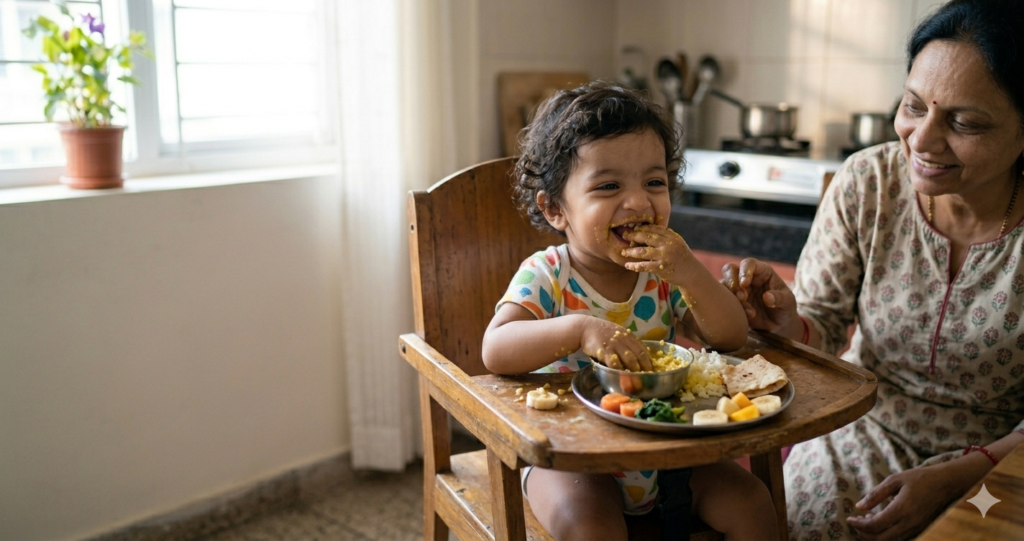
A baby’s palate, meaning their taste preferences and food acceptance patterns, is actively being formed during the first two years of life. Babies are born with a remarkable openness to a wide range of flavors. They will accept bitter, sour, earthy, and mild savory tastes far more readily in infancy than they will at age three or four. This openness is a gift, and it is entirely possible to build on it.
When salt and sugar are added to food during this window, something important happens. The natural taste of the food gets masked. The baby’s brain begins to associate eating with a modified, intensified flavor experience. Over time, plain rice, dal, vegetables, and fruit start tasting bland by comparison. The child begins refusing natural foods and develops a preference for heavily seasoned or sweet tastes. This is exactly the pattern that creates fussy eaters, and it often starts much earlier than parents realize.
Parents frequently mention that their toddler will not eat vegetables. When the weaning history is traced back carefully, added salt and sugar almost always appear in the picture around 6 to 8 months. In many Indian families, the transition to family food happens quickly. Khichdi gets salt because it seems too plain. Dal gets a pinch of sugar because the baby made a face. These small daily decisions, made with genuine love, quietly reshape a child’s palate in ways that take years to reverse.
Does a Baby’s Body Actually Need Added Salt or Sugar?
This is the point most parents have not heard clearly before, and it changes everything.
The human body, including a baby’s body, absolutely needs sodium. Sodium is essential for fluid balance, cell function, nerve activity, and muscle movement. But the sodium a baby needs is already present in natural foods. Breast milk contains approximately 141mg of sodium per litre. Formula provides similar levels. Dal, rice, vegetables, and cereals all contain naturally occurring sodium. A baby eating a balanced diet of whole natural foods is already meeting their sodium requirement without a single pinch of added salt.
The same logic applies to sugar. The body needs glucose for energy, but that glucose comes efficiently from the natural carbohydrates in rice, roti, fruit, and sweet vegetables like carrot and sweet potato. There is no physiological need for refined sugar to be added to a baby’s food at any point in the first two years.
When parents ask whether their baby will be nutritionally deprived without added salt or sugar, the answer is no. The concern is not deficiency. The concern is excess and the long-term habits that excess quietly creates.
What Happens When Babies Have Too Much Salt or Sugar Too Early?
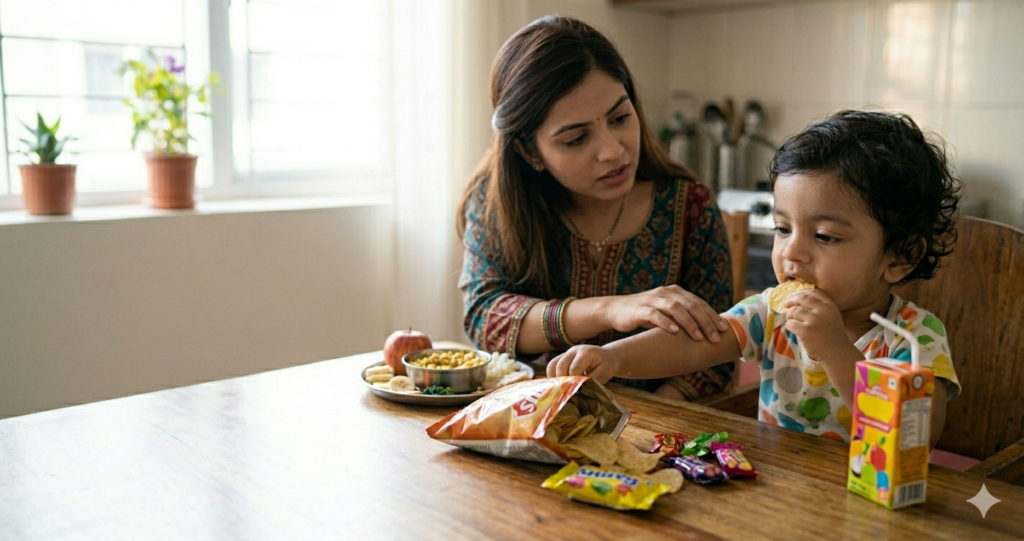
The risks of early salt and sugar are not always visible at the moment. They accumulate quietly, and many of them show up years later rather than immediately.
What excess salt does to a young body: A baby’s kidneys in the early months are still developing their full capacity to filter and excrete sodium. Excess dietary sodium creates a workload the kidneys are simply not designed to handle at this stage, and over years this contributes to kidney disease risk. Excess sodium also causes the body to excrete more calcium in urine, which can crystallize into kidney stones over time. Multiple health guidelines from Australia, Canada, China, New Zealand, the United Kingdom, and Korea specifically cite the link between high sodium in infancy and elevated blood pressure in adulthood as a key reason for the no-added-salt recommendation. Beyond blood pressure, the same calcium excretion mechanism can gradually reduce bone density, increasing the risk of brittle bones and osteoporosis in later life. And practically, excess sodium causes the body to lose water through urine and sweat, making young children vulnerable to dehydration.
What excess sugar does to a young body: Sugar is the primary driver of dental caries in young children. Even before the full set of milk teeth has emerged, early sugar exposure begins setting up the conditions for painful cavities that will need treatment. The habit of sweet foods in early childhood is consistently linked to higher rates of obesity and type 2 diabetes in later life, as excess sugar means excess calories with limited nutritional value. High sugar intake also triggers excess insulin production, and too much insulin causes energy crashes that show up as tiredness, irritability, and reduced alertness in young children.
Perhaps the most underappreciated risk is the rejection of breast milk. Babies who develop a preference for sweet tastes can begin refusing breastfeeds because plain breast milk starts to feel unsatisfying by comparison. Breast milk is a baby’s primary source of antibodies, immune protection, and essential nutrients. Losing that feeding relationship early, because a baby has already developed a preference for sweetened tastes, is a significant nutritional loss.
A mother came in concerned that her eight-month-old had started refusing breastfeeds. The baby was thriving otherwise. When the feeding history was explored in detail, it turned out the family had been adding a little sugar to the baby’s kheer and fruit puree since month six. The taste preference had already shifted within two months.
Salt, Sugar, and Safe Alternatives: A Quick Reference for Parents
| Age | Salt | Sugar and Sweeteners | What to Use Instead |
| 0 to 6 months | None, breast milk or formula only | None at all | Breast milk or formula provides everything needed |
| 6 to 12 months | No added salt | No sugar, no honey, no jaggery | Natural flavours from dal, vegetables, and fruit puree |
| 12 to 24 months | Avoid if possible, only trace amounts | Avoid if possible | Mild spices like jeera, haldi, coriander, and natural sweetness from banana, chikoo, or mango |
| After 2 years | Introduce very gradually and keep very low | Occasional and minimal | Continue prioritising whole foods and natural flavours |
| Always avoid | Packaged salty snacks, chips, and namkeen | Packaged juices, biscuits, flavoured milk, and mithai | Home-cooked meals with whole, natural ingredients |
Important note on honey and jaggery: Honey must never be given before 12 months due to the risk of infant botulism, a serious and potentially life-threatening condition. Jaggery, despite being natural and deeply embedded in Indian food culture, is still a form of added sugar and carries the same risks of taste preference alteration and tooth decay as refined sugar. The better option at every stage is the natural sweetness of ripe fruit.
What to Give Instead: Natural Ways to Add Flavour to Baby Food
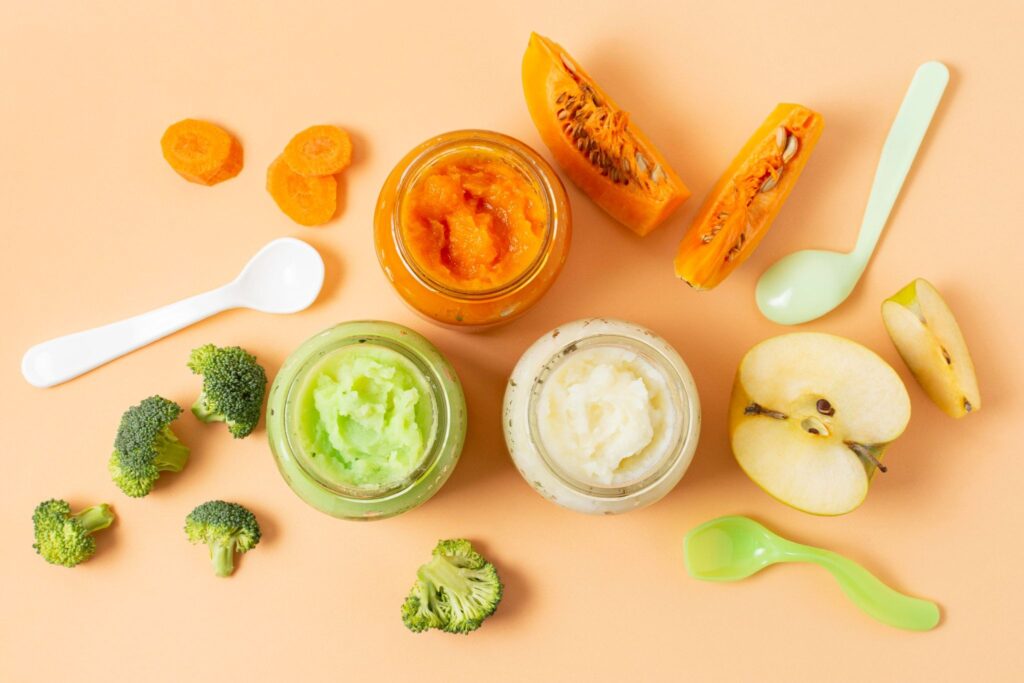
- Use natural ingredients from the Indian kitchen instead of adding salt, sugar, or condiments.
- From 6 months onwards, mild haldi in dal can add gentle flavour and colour.
- A light tempering of jeera in ghee can make simple foods more aromatic and appealing.
- Fresh coriander leaves and curry leaves can add familiar Indian flavours without extra seasoning.
- For natural sweetness, mashed banana mixed into rice is a simple and popular option.
- Purees made from chikoo, mango, carrot, pumpkin, or roasted sweet potato are naturally sweet enough for babies.
- Babies who have never had refined sugar usually enjoy the natural sweetness of fruits and vegetables.
- Offer different textures such as smooth, mashed, soft-cooked, and slightly lumpy foods.
- A variety of textures can help babies become more comfortable with different foods and reduce picky eating later.
- Let babies get used to the real taste of foods so dal tastes like dal, rice tastes like rice, and vegetables taste like vegetables.
- Building this connection with natural food in the first two years can support healthier eating habits for life.
Conclusion
Both salt and sugar are unnecessary additions to a baby’s food in the first two years of life. The body’s sodium and glucose needs are fully met through natural whole foods. The real value of avoiding added flavors during this window is not just about preventing harm. It is about building the foundation of a child’s relationship with food, a relationship that will shape their eating habits, health choices, and nutritional wellbeing for the rest of their life.
Plain food is not boring to a baby who has never tasted anything else. Natural flavors are genuinely enough. The Indian kitchen already has everything needed to feed a baby beautifully, dal, rice, vegetables, fruit, ghee, and mild spices, without a pinch of added salt or a spoon of added sugar.
The first two years pass faster than any parent expects. The habits formed in this window are worth protecting.
Starting solids and not sure what to give, when to give it, or how much? Book a consultation at Vivasvan Child Care Clinic, Mumbai. A personalized weaning plan makes the first two years of feeding simpler, safer, and genuinely enjoyable for both you and your baby.
Frequently Asked Questions
Most health guidelines recommend avoiding added salt before 12 months and avoiding added sugar, honey, and jaggery for at least the first two years. Babies get all the sodium and energy they need from natural foods, breast milk, or formula.
No. Honey should never be given before 12 months because of the risk of infant botulism. Jaggery is still a form of added sugar and can affect taste preferences and increase the risk of tooth decay. Natural sweetness from banana, chikoo, sweet potato, or mango is a better option.
After 12 months, babies can slowly begin eating family meals, but the food should still have very little added salt and no added sugar. Packaged snacks, chips, and namkeen should still be avoided.
This often happens if the baby has already become used to salty food. Reduce salt slowly over two to three weeks and add natural flavours instead, such as jeera in ghee, tomato in dal, or ripe mango with meals.
Yes. Babies have immature kidneys that cannot handle large amounts of sodium. Too much salt can put strain on the kidneys and may increase the risk of high blood pressure and kidney problems later in life

Vivasvan Parekh
As a pediatrician and child specialist based in Mumbai, I bring over 15 years of experience in delivering comprehensive child healthcare. I hold an MD in Pediatrics and practice in Ghatkopar East and Chembur, where I focus on preventive and evidence-based pediatric care. My areas of expertise include vaccinations, newborn care, growth and development monitoring, and the treatment of common and complex childhood illnesses. I am committed to supporting parents with practical, reliable guidance on child health, nutrition, and overall well-being. Through my blog, I share trusted insights on pediatric health, helping parents make informed decisions about their child’s care and development.