
Quick Answer: Most babies get their first tooth around 6 months, though anywhere between 4 and 12 months is normal. Teething usually causes drooling, gum swelling, irritability and chewing on objects, not high fever or diarrhoea. Chilled teeth, gentle gum massage and extra comfort are the safest first steps at home, and all 20 milk teeth are usually in by around 2.5 to 3 years.
- The lower front teeth (central incisors) almost always arrive first
- A mild temperature rise can happen, but a true fever of 38°C or higher needs a doctor’s check, not just teething
- Diarrhoea is not caused by teething itself and should be evaluated separately
- Numbing gels, amber necklaces and unverified teething syrups are best avoided
- No tooth by 15 to 18 months is usually still normal, but worth a dental check
That First Tooth Moment
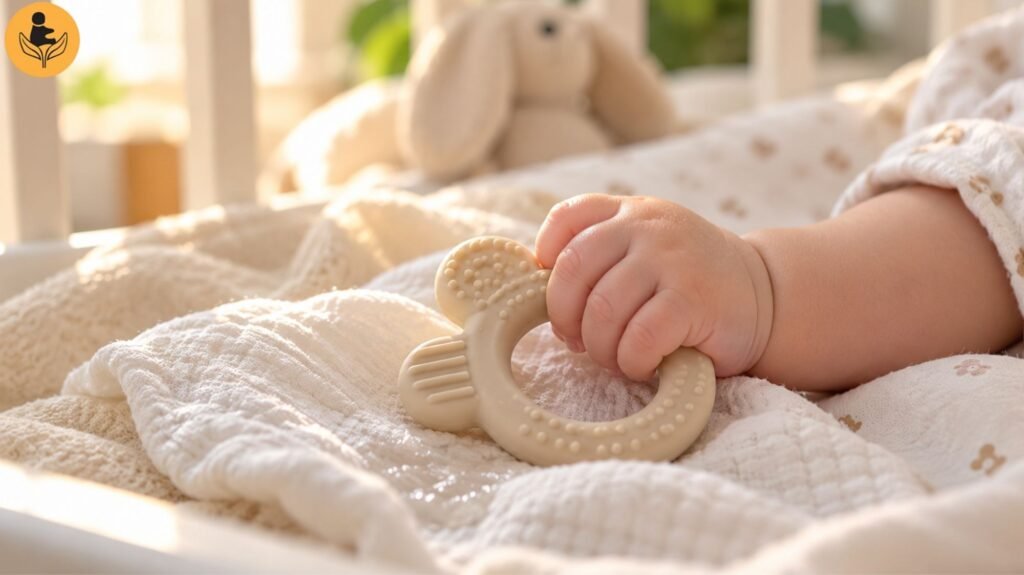
A baby waking up three nights in a row, drooling onto every burp cloth in the house, and suddenly gnawing on anything within reach, for most Indian parents, this is the first real sign that a tooth is on its way. It’s one of those milestones that feels bigger than it is: unsettling in the moment, but almost always a normal, healthy part of development.
Teething doesn’t follow a strict schedule. Some babies cut their first tooth at four months without anyone noticing much discomfort at all; others are closer to a year old before that first white edge appears along the gum. Both are within the normal range. What matters more than the exact date is recognising genuine teething symptoms, knowing what actually helps, and knowing which signs call for a paediatrician’s opinion rather than a teether.
Baby Teething Chart: Month-by-Month Timeline
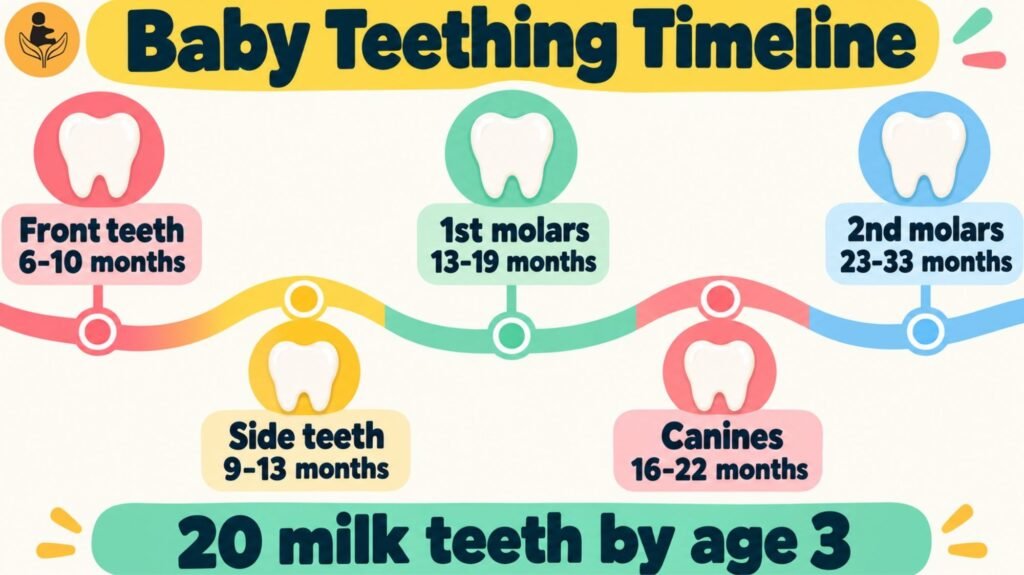
Here is the general order in which milk teeth tend to erupt. This infant teething chart is a guide, not a rulebook, the sequence and timing vary quite a bit from baby to baby, and that variation alone is rarely a concern.
| Tooth type | Usual age range | Jaw |
| Central incisors | 6 to 10 months | Lower, then upper |
| Lateral incisors | 9 to 13 months | Upper, then lower |
| First molars | 13 to 19 months | Lower and upper |
| Canines | 16 to 22 months | Lower and upper |
| Second molars | 23 to 33 months | Lower and upper |
By around 2.5 to 3 years, most children have all 20 milk teeth. If one tooth is running late while the others are on schedule, that’s usually just this particular baby’s own pattern, not a sign that something is wrong. Order and timing genuinely do vary, and late teething on its own is rarely a reason for concern.
Common Teething Symptoms
Drooling, Chewing and Irritability
Increased drooling is often the earliest sign, sometimes starting weeks before a tooth is actually visible. Babies chew on fingers, toys, clothing, anything they can get into their mouth, because the pressure provides some relief against the gum. Fussiness, especially in the evenings, is common too.
Swollen Gums and Sleep Disturbance
The gum over the emerging tooth often looks puffy and slightly reddened, and may feel firm or raised to the touch. Many babies who normally sleep well start waking more often for a few nights around the time a tooth is actually breaking through, this tends to settle once the tooth is through.
Mild Temperature, Cheek Rash and Nappy-Area Redness
A slightly warm forehead, a touch of redness on the cheeks, or mild nappy-area irritation from extra drooling and saliva being swallowed are all within the range of normal teething. None of these should be dramatic or prolonged.
Symptoms That Are NOT Teething
It’s worth being clear about what teething does not typically cause, because these are also the symptoms many Indian households attribute to it out of habit:
- A true fever of 38°C (100.4°F) or higher
- Repeated vomiting
- Watery or frequent diarrhoea
- Refusing all feeds, not just chewing more and feeding less
If any of these appear, they deserve their own evaluation rather than being written off as “just teething.”
How to Soothe Teething Pain Safely
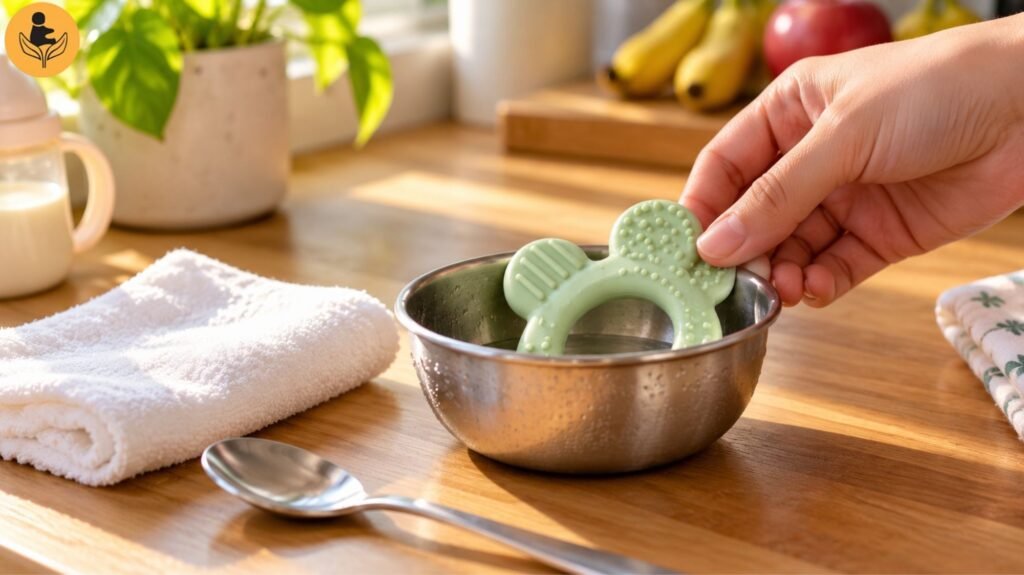
A parent in a consultation once described trying three different gels in one week because nothing seemed to work, a common story, and usually a sign that the approach needs simplifying rather than intensifying. The safest, most effective options tend to be the simplest ones:
- Clean finger gum massage, a gentle rub with a clean finger over the sore area, for a minute or two
- A chilled (not frozen) teether, cold without being hard enough to injure the gum
- A cold spoon or chilled, damp washcloth, easy alternatives if a teether isn’t on hand
- Extra holding and comfort, teething is uncomfortable, and comfort itself genuinely helps
If the baby is already established on solids, chilled, soft, age-appropriate solids can help under direct supervision, never anything that poses a choking risk. Any pain relief medicine should only be given on the paediatrician’s specific advice, dosed by the baby’s weight, never guessed at home.
What to Avoid
Several products that are widely available and commonly searched for are not recommended by paediatric guidance:
- Numbing gels containing benzocaine or lidocaine, linked to safety concerns in infants
- Amber or bead necklaces, a genuine choking and strangulation risk, with no proven benefit
- Frozen (as opposed to chilled) teethers, can be hard enough to bruise the gum
- Honey for babies under 1 year, risk of infant botulism, unrelated to teething but relevant here too
- Teething tablets and syrups, including those commonly asked about in Hindi (teething syrup uses), evidence for these is limited, and they should only be considered after asking the paediatrician directly, rather than based on packaging claims or word of mouth
Caring for New Teeth
Once a tooth is visible, oral care starts immediately, there’s no need to wait for more teeth to arrive:
- Wipe the gums with a clean, damp cloth after feeds, even before the first tooth appears
- Begin brushing from the very first tooth, using a smear of fluoride toothpaste roughly the size of a grain of rice
- Plan the first dental visit around the time of the first tooth, or by the first birthday, whichever comes first
For more detail on timing that first visit, see the clinic’s guide on when to take your baby for their first dental visit.
When to See a Paediatric Dentist or Doctor
Most teething resolves on its own with simple home comfort measures. A visit is worth arranging if:
- There’s a fever of 38°C or higher
- No first tooth has appeared by 15 to 18 months
- There’s visible gum swelling with pus or an unusual lump
- The baby is refusing feeds altogether, not just chewing instead of feeding
- Symptoms are lasting more than a few days without easing
None of these are common, but they’re useful to know in advance rather than figuring out in the moment.
Conclusion
Teething can make for a few difficult nights, but for the large majority of babies, it passes with nothing more than a chilled teether, some extra cuddles and a little patience. Knowing the real signs, and the signs that aren’t teething at all, makes the whole stretch far less worrying to navigate.
If sleepless nights, feeding changes or any symptoms outside the usual pattern are causing concern, a quick conversation with a paediatrician can offer real reassurance. Book a consultation with Dr. Vivasvan Parekh at Child Care Clinic Mumbai to talk through what’s normal for your baby.
Frequently Asked Questions
Most babies get their first tooth around 6 months, though anywhere from about 4 to 12 months can be normal. Lower front teeth usually come first, with the rest following in a fairly predictable order over the next couple of years.
It can cause a slight rise in temperature, but a true fever of 38°C or higher is usually not from teething alone. It’s worth calling the doctor to rule out an infection rather than assuming it’s related to the new tooth.
Teething does not directly cause diarrhoea. Extra drooling and chewing on objects can sometimes loosen stools slightly, but watery or frequent stools are a separate issue and deserve a doctor’s check.
A chilled teether, gentle finger gum massage and a cold, damp washcloth are safe first choices for most babies. Any medicine, gel or syrup should only be given after checking with the paediatrician first.
Yes, this is often normal and tends to run in families. If there’s still no tooth by 15 to 18 months, it’s a reasonable time to have a paediatric dentist take a look.
Medically reviewed by Dr. Vivasvan Parekh, Child Care Clinic Mumbai.

Vivasvan Parekh
As a pediatrician and child specialist based in Mumbai, I bring over 15 years of experience in delivering comprehensive child healthcare. I hold an MD in Pediatrics and practice in Ghatkopar East and Chembur, where I focus on preventive and evidence-based pediatric care. My areas of expertise include vaccinations, newborn care, growth and development monitoring, and the treatment of common and complex childhood illnesses. I am committed to supporting parents with practical, reliable guidance on child health, nutrition, and overall well-being. Through my blog, I share trusted insights on pediatric health, helping parents make informed decisions about their child’s care and development.