
A simple cup of chai can quietly affect your child’s health more than you might think. This guide explains how tannins in tea block iron absorption, increasing the risk of iron deficiency, one of the most common nutritional issues in children. It also uncovers how tea impacts appetite, sleep, and overall nutrition. Written in a clear, parent-friendly tone, it connects everyday habits to real health outcomes and offers easy, practical fixes using familiar Indian foods. Small changes, like when and what your child drinks, can make a big difference to their energy, growth, and long-term wellbeing.
Every week, parents bring in children who are tired, pale, eating poorly, and not growing the way they should. When the investigation begins, iron deficiency is almost always part of the picture. And when asked about the child’s daily routine, tea comes up more often than most parents expect.
Iron deficiency is the most common nutritional deficiency in children worldwide. In India, studies suggest that over 50% of children under five are anaemic, with iron deficiency being the leading cause. These are not small numbers. They represent millions of children sitting in classrooms struggling to concentrate, playing less than they should, and growing more slowly than their bodies are capable of.
In many Indian households, giving children a cup of chai feels natural, even nurturing. It is what the family drinks. It is warm and familiar. But there is a specific reason pediatricians advise against it, and it goes well beyond caffeine.
Want a quick, parent-friendly explanation? Watch the Instagram reel below:
Iron Deficiency Is Not Just About Eating Less. Diet Composition Matters Enormously
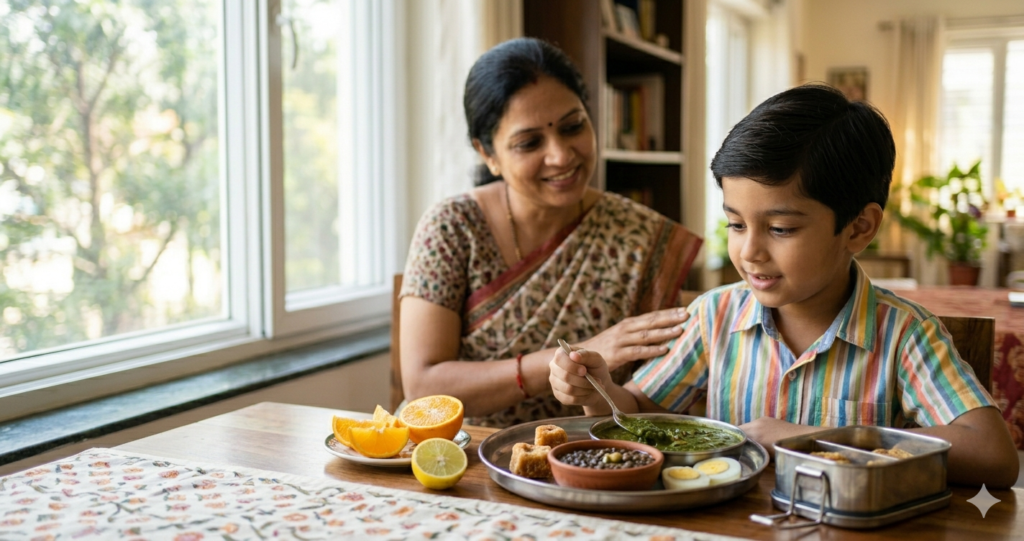
The primary cause of iron deficiency in children is inadequate iron from the diet. But the problem is rarely as simple as a child not eating enough. Often, what the child is eating is not being absorbed properly by the body. And that distinction changes everything about how the problem is addressed.
Iron exists in two forms in food. Haem iron comes from animal sources like meat, fish, and eggs and is absorbed efficiently. Non-haem iron comes from plant-based sources like dal, palak, rajma, chana, and fortified cereals. In most Indian children’s diets, particularly in vegetarian households, non-haem iron makes up between 70% and 90% of total dietary iron. It is the dominant source. And it is also the form most vulnerable to being blocked.
E.g. A seven-year-old came into the clinic recently with persistent fatigue, pale gums, and declining concentration at school. The family ate a reasonably balanced vegetarian diet. Nothing immediately obvious stood out. The detail that changed the picture: the child had been drinking a cup of tea with the family every morning since age four. Three years of daily chai, consumed right alongside breakfast, the meal where most of the day’s iron intake happens.
It Is Not Caffeine. It Is the Tannins.
Most parents assume that caffeine is the main reason pediatricians advise against tea for children. Caffeine is a concern, but it is not what blocks iron. The real culprit is something most parents have never heard of: tannins.
Tannins are naturally occurring polyphenol compounds found in tea. They are what give strong chai its characteristic bitter, astringent taste. When a child drinks tea around mealtime, these tannins travel through the digestive tract and chemically bind to non-haem iron from food, forming compounds called iron-tannate complexes. These complexes are insoluble. The body’s intestinal wall cannot absorb them. The iron that should have nourished the child simply passes through the system unused.
A clinical study conducted on human volunteers confirmed this mechanism directly. Iron absorption from bread, vegetarian meals of rice with potato and onion soup, and iron solutions was significantly inhibited by tea regardless of whether Vitamin C was present. The finding matters because many parents believe that giving a child nimbu or tomato alongside a meal is enough to overcome the problem. In the presence of strong tea, the tannin effect is powerful enough to override even Vitamin C’s absorption-enhancing properties.
Black tea, the base of most Indian chai, averages around 15% tannin content. White tea sits even higher at approximately 17%. A 2024 study from Kenya found that black tea consumption was directly associated with iron deficiency among participants, with the association growing stronger with longer brew times and greater tea strength. This mirrors precisely how chai is prepared in most Indian homes: strong, long-brewed, and consumed right alongside or immediately after meals.
Tea Does Not Just Block Iron. It Harms a Child’s Nutrition in Three Other Ways.

Iron absorption is only the beginning of the problem. Tea affects a growing child’s nutritional status in compounding ways that most parents do not connect until the damage has already accumulated.
Caffeine directly affects the developing nervous system. In children, it can cause hyperactivity, difficulty settling at night, disrupted sleep, and irritability through the day. Sleep disturbance itself has serious downstream effects on growth hormone release, mood regulation, and cognitive development. A child who is not sleeping well is not growing as efficiently as they should be.
Most chai served to children in Indian households contains significant added sugar. Regular sugar in a child’s diet is linked to poor appetite for nutritious food, dental caries, weight concerns, and a reinforced preference for sweet tastes over vegetables and dal.
Then there is the fullness problem, and this one is particularly important. Tea fills a child’s stomach. A cup of chai before or alongside a meal means the child consumes less dal, sabzi, roti, and rice, the very foods that provide the iron, protein, and micronutrients their body needs. Tea does not just block the iron being absorbed. It also displaces the food that would have provided the iron in the first place.
Parents often mention that their child is a fussy eater who never finishes meals. When the full picture of daily intake is explored, tea is frequently part of the pattern. Reducing or removing tea from a child’s routine commonly improves appetite within two to three weeks.
What Parents Can Do: Practical Steps That Actually Work
- Remove tea from a child’s daily routine, especially around mealtimes.
- If older children or teenagers already drink tea, keep at least a one-hour gap between meals and tea.
- Include iron-rich foods regularly, such as masoor dal, rajma, chana, moong dal, palak, and methi.
- Pair iron-rich foods with foods high in Vitamin C, such as tomatoes, lemon, amla, or mosambi juice.
- Add a squeeze of lemon to dal or sabzi to help the body absorb iron more effectively.
- Build simple, balanced meals with dal, sabzi, rice or roti, and fresh fruit.
- Replace tea with healthier drinks like water, coconut water, or homemade nimbu pani.
- Focus on making every meal nutrient-rich rather than filling children up with sugary or low-nutrition drinks.
Conclusion
Tea is not a neutral drink for children. Tannins block iron. Caffeine disrupts sleep and behaviour. Sugar displaces nutritious food. And the fullness effect means children eat less of what they actually need at the meals that matter most. None of this is about eliminating a single occasional cup. It is about understanding what daily tea consumption does to a growing child’s body over months and years, quietly, without obvious symptoms, until the deficiency is established enough to show up in a blood test.
The solution is genuinely simple. Prioritize water, fresh fruit, and nimbu pani. Build a plate of dal, sabzi, and whole grains at every meal. Pair iron-rich foods with Vitamin C. And if tea is part of the family routine, keep it away from children under 12 and away from mealtimes for everyone else.
These are not dramatic changes. But for a child’s iron levels, growth, and long-term development, they make an extraordinary difference.
Concerned about your child’s energy levels, appetite, or growth? Book a consultation at Vivasvan Child Care Clinic, Mumbai. A simple blood test can tell us exactly where your child stands, and the right guidance from there can change everything.
Frequently Asked Questions
1. Can tea cause iron deficiency in children?
Yes. Tea contains tannins that bind to non-haem iron in the digestive tract and reduce how much the body can absorb. Over time, regular tea consumption can increase the risk of iron deficiency, especially in children who eat mostly vegetarian foods.
2. At what age can children start drinking tea safely?
Most pediatricians recommend avoiding tea for children under 12 years. Tea contains caffeine, can affect sleep and behaviour, and often comes with added sugar. Plain water is still the best everyday drink for children.
3. Does the type of tea matter? Is green tea safer?
Green tea contains less tannin than black tea, but it can still interfere with iron absorption. It is not ideal as a regular drink for children. Better options include water, fresh juice in moderation, coconut water, or homemade nimbu pani.
4. What are the signs of iron deficiency in children?
Common signs include tiredness, pale skin, pale gums, poor appetite, headaches, and difficulty concentrating. Younger children may also seem irritable, less active, or slower to reach developmental milestones.
5. Which Indian foods help improve iron absorption in children?
Good iron-rich foods include masoor dal, rajma, chana, moong dal, palak, methi, and fortified atta. Pair them with foods rich in Vitamin C, such as tomatoes, lemon, amla, or mosambi juice, to help the body absorb iron more effectively.

Vivasvan Parekh
As a pediatrician and child specialist based in Mumbai, I bring over 15 years of experience in delivering comprehensive child healthcare. I hold an MD in Pediatrics and practice in Ghatkopar East and Chembur, where I focus on preventive and evidence-based pediatric care. My areas of expertise include vaccinations, newborn care, growth and development monitoring, and the treatment of common and complex childhood illnesses. I am committed to supporting parents with practical, reliable guidance on child health, nutrition, and overall well-being. Through my blog, I share trusted insights on pediatric health, helping parents make informed decisions about their child’s care and development.