
Most “healthy snacks” marketed for children are not as healthy as they appear. From multigrain biscuits and fruit bars to yogurt drinks and baked chips, many packaged snacks contain hidden sugars, refined flour, preservatives, palm oil, and artificial additives that parents often miss because of misleading front-label claims. This guide helps parents understand what is really inside these products, how to spot unhealthy ingredients in under two minutes, and why simple homemade Indian snacks like makhana, fruits, chana, idli, and dahi are often far better choices. Because when it comes to children’s nutrition, the ingredient list matters far more than the marketing on the packet.
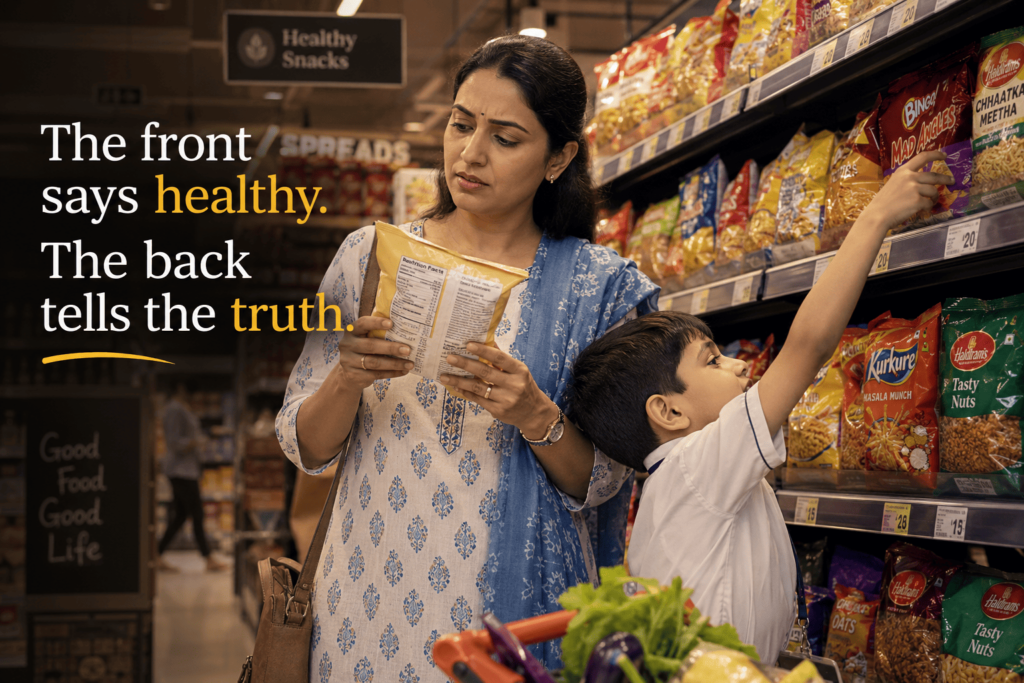
Every week in the clinic, parents walk in holding packets of snacks they are genuinely proud of. Multigrain biscuits. Fruit bars. Yogurt drinks. Baked chips.
“Doctor, we have switched to healthy snacks,” they say. And then the packet gets turned around.
What is on the back is almost never what the front promised.
Most packaged snacks marketed as healthy for children contain between 14 and 21 grams of sugar per serving, which is comparable to a candy bar. In India, the packaged food market for children is growing faster than ever, with parents spending more on products labeled “natural,” “multigrain,” “baked,” and “protein-rich” than on any previous generation. The intention is right. The information, unfortunately, is being controlled by the people selling the product.
This article is about fixing that.
Want to see what is really hiding in your child’s favourite snack packet? Watch the reel below:
The Definition of Healthy Is Being Quietly Distorted
When a product says it is healthy, what is that claim actually based on? Almost always, it is based on one ingredient or one nutrient being present, not on the overall nutritional profile of the product.
A biscuit can be called multigrain because it contains three types of grain, even if the first and dominant ingredient is refined maida. A drink can be called natural even if it contains fruit concentrate, which is effectively sugar with the fibre removed. A snack can be called baked even if it is baked in palm oil with significant sodium and artificial preservatives.
This is what nutrition researchers call the health halo effect: the false impression that a product is nutritious based on one or two front-label claims, regardless of what is actually inside. Food companies are fully aware of this psychological phenomenon and use it deliberately. Terms like multigrain, baked, natural, low-fat, fruit-based, and fortified with vitamins are placed prominently on the front of packaging because they stop most parents from turning the packet around.
The rule that should be applied every single time is this: front-of-pack claims are marketing. The ingredient list on the back is the truth.
When parents read the ingredient list aloud in the clinic for the first time, the reaction is almost always the same. Surprise. Followed by: “I had no idea.”
The Ingredients That Are Hiding in Plain Sight
1. Sugar has more names than most people realize.
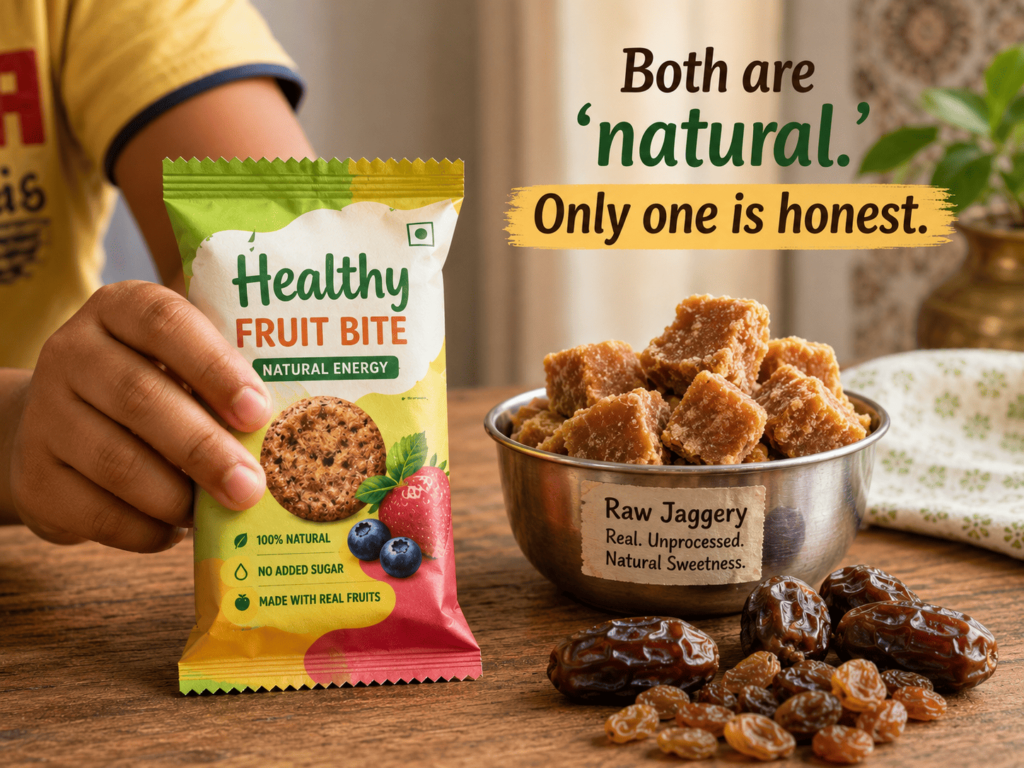
Glucose syrup, maltodextrin, inverted sugar, fructose, corn syrup, dextrose, fruit concentrate, and sucrose all mean sugar. A product labeled “no added sugar” can still legally contain every single one of these. When any of them appear in the first three ingredients, the product is effectively a sweet, regardless of what the front label calls it.
Granola and cereal bars commonly contain 14 to 21 grams of sugar per serving. Flavored yogurt drinks marketed specifically for Indian children can contain more sugar than a glazed donut. Packaged fruit juices positioned as healthy can carry as much sugar per 200ml as a cola, without any of the fibre that whole fruit would provide.
2. Refined fats do not belong in a child’s daily snack.
Palm oil and hydrogenated vegetable oil are the most common fats in Indian packaged snacks. Both extend shelf life. Hydrogenated vegetable oil contains trans fats associated with cardiovascular disease. Neither has any nutritional value for a growing child.
3. Preservatives and additives add shelf life, not health.
Artificial preservatives, emulsifiers, and flavor enhancers appear under names like INS 211, INS 202, INS 471, and MSG. These exist to make processed food taste better and last longer on a shelf. Regular consumption of artificial additives is linked to disruption of gut bacteria, bloating, reduced immunity, and effects on mood and concentration in children.
4. Maida is everywhere it should not be.
Refined white flour, maida, is the base ingredient in dozens of products marketed as digestive, multigrain, or whole wheat biscuits across India. Maida has had its fibre, vitamins, and minerals stripped out during processing. It causes rapid blood sugar spikes and contributes nothing meaningful to a child’s nutritional needs. Yet it appears as the first ingredient in an enormous number of children’s packaged snacks.
5. The serving size trick is cleverer than it looks.
Many products list nutrition per 20 or 30 gram serving, which sounds reassuringly small. But children rarely eat just one serving. A packet of biscuits contains four or five servings. When actual consumption is calculated honestly, the sugar and sodium numbers are dramatically higher than the label implies.
The Best Snacks for Children in India Are Already in Your Kitchen
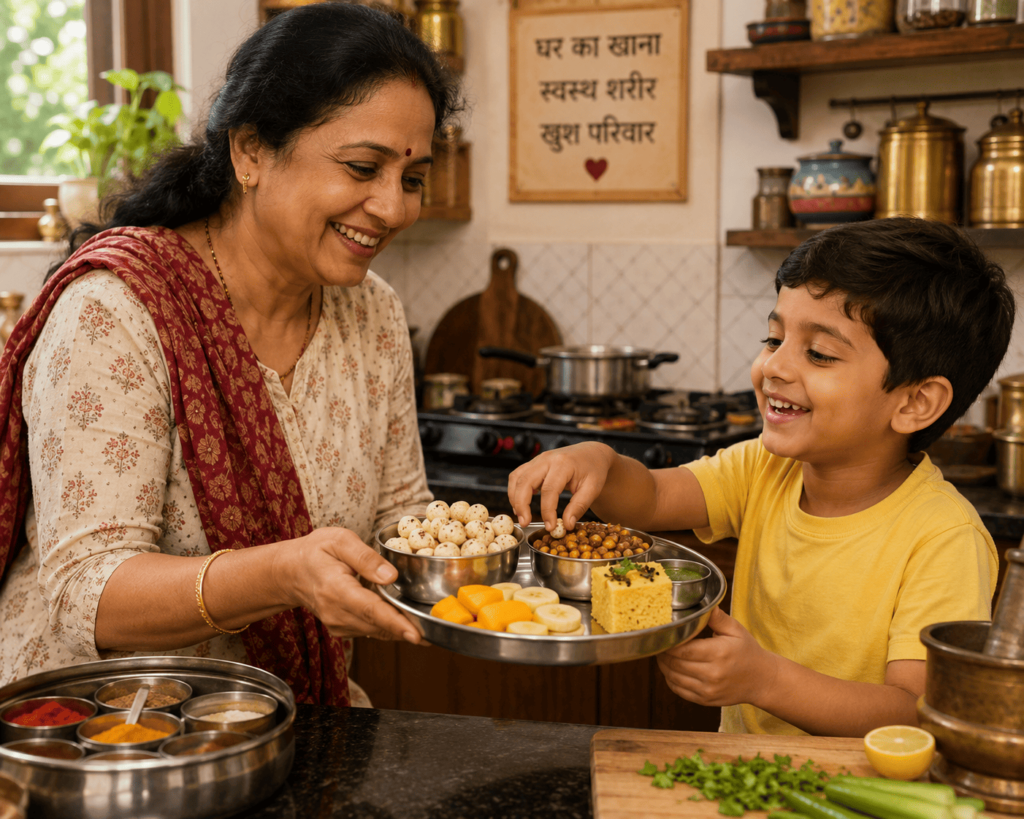
When parents ask for the best snacks for children, the first answer is always the same: go to your kitchen, not the supermarket aisle. The supermarket has marketing. The kitchen has food.
Roasted makhana with a pinch of turmeric and ghee. Fresh fruit with a little chaat masala for children who want something with a kick. Homemade groundnut chikki using jaggery instead of refined sugar. Boiled corn with lime and a pinch of sendha namak. Idli with sambhar. Plain dahi with fresh banana mashed in. A small bowl of roasted chana. Steamed dhokla with green chutney.
None of these have ingredient lists. None of them need a health claim on a packet. And every single one of them is genuinely more nutritious than the packaged alternatives filling Indian supermarket shelves.
These are not complicated or expensive options. They are the foods Indian kitchens have always known how to make. The only thing that changed is that clever marketing convinced an entire generation of parents that real food was somehow less good than processed food in attractive packaging.
How to Read a Food Label in Under Two Minutes
This is the practical skill every Indian parent needs, and it takes less time than most people think.
Step one: Ignore the front of the pack entirely. Turn it around. Everything on the front is designed to sell. Everything on the back is regulated information.
Step two: Read the first three ingredients. These make up the majority of the product by weight. If sugar under any name, maida, or palm oil appears in the first three, the product is not a healthy snack for a child, regardless of what the front label says.
Step three: Check sugar content per 100 grams on the nutrition panel. Anything above 15 grams is high. Check sodium per 100 grams. Anything above 400 milligrams is high.
Step four: Count the ingredients. A genuinely clean snack has a short, recognizable list. If the ingredient list runs to fifteen or twenty items with names that sound like a chemistry exam, the product is ultra-processed.
Step five: Ask one honest question. Could this be made at home with ingredients from a kitchen? If the answer is no, that tells a parent something very important about what is actually in it.
Conclusion
The word healthy on a food packet is not a fact. It is a claim made by the company selling the product, based on whatever single positive attribute they choose to highlight. A multigrain biscuit is still mostly maida. A natural fruit drink is still mostly sugar. A baked snack is still often full of refined flour and sodium.
None of this means every packaged product is off limits. It means parents need to read the label every single time, starting with the ingredient list, not the health claim on the front. It means defaulting to whole foods from the Indian kitchen wherever possible. And it means understanding that the most nutritious snacks for children rarely need a packet at all.
Building this habit, consistently, over weeks and months, makes an extraordinary difference to what a child actually eats versus what their parents believe they are eating.
Have questions about your child’s diet, snacking habits, or nutrition? Book a consultation at Vivasvan Child Care Clinic, Mumbai. Understanding what your child is actually eating is the first step to helping them grow well.
Frequently Asked Questions
Not always. Many snacks marketed as healthy still contain hidden sugar, refined flour, palm oil, and preservatives. The best way to evaluate a snack is by checking the ingredient list and nutrition label rather than trusting front packaging claims.
Simple homemade and minimally processed foods are usually the best options. Healthy choices include:
Roasted makhana
Fresh seasonal fruits
Plain dahi
Homemade chikki
Roasted chana
Idli with sambhar
Boiled corn
Steamed dhokla
These foods provide better nutrition without excessive additives or hidden sugars.
Sugar often appears under different names such as glucose syrup, maltodextrin, fructose, dextrose, corn syrup, or fruit concentrate. Always read both the ingredient list and sugar content per 100 grams on the nutrition panel.
Limit snacks containing:
Maida
Added sugar
Palm oil
Hydrogenated oils
Artificial colours
Preservatives and flavor enhancers
These ingredients increase shelf life and taste but provide little nutritional value.
Children aged 2 to 18 should ideally consume no more than 25 grams of added sugar daily. For packaged snacks, choosing options with less than 5 grams of sugar per serving is generally a better guideline.

Vivasvan Parekh
As a pediatrician and child specialist based in Mumbai, I bring over 15 years of experience in delivering comprehensive child healthcare. I hold an MD in Pediatrics and practice in Ghatkopar East and Chembur, where I focus on preventive and evidence-based pediatric care. My areas of expertise include vaccinations, newborn care, growth and development monitoring, and the treatment of common and complex childhood illnesses. I am committed to supporting parents with practical, reliable guidance on child health, nutrition, and overall well-being. Through my blog, I share trusted insights on pediatric health, helping parents make informed decisions about their child’s care and development.