
Choosing between cloth and disposable diapers depends on what works best for your baby and your daily routine. Disposable diapers are convenient, highly absorbent, and ideal for travel or busy schedules. Cloth diapers, on the other hand, are reusable, eco-friendly, and made from gentle, breathable fabrics that may suit sensitive skin. While cloth requires more effort with washing, it can save money over time and reduce waste. Many parents find a mix of both works best, using cloth at home and disposables when needed. Ultimately, the priority is keeping your baby comfortable, clean, and rash-free.
During newborn consultations, one question comes up repeatedly: cloth diapers vs disposable diapers, which one should parents choose?
For modern families, the decision is rarely simple. Disposable diapers offer convenience and strong absorption, while cloth diapers promise sustainability and reduced chemical exposure.
Globally, babies use around 6,000 to 8,000 diapers before potty training, and disposable diapers alone generate millions of tons of landfill waste every year. Many of these products take hundreds of years to decompose because they contain plastics and synthetic materials.
In India, where environmental awareness is growing and parents are increasingly concerned about baby skin health, many families are now exploring eco-friendly diapers for babies, including reusable cloth options.
From a pediatric perspective, both options have advantages and limitations. The best choice often depends on your baby’s skin sensitivity, your lifestyle, and your environmental priorities.
Understanding the real differences between disposable diapers vs cloth diapers can help parents make an informed and balanced decision.
Take a look at this helpful Instagram reel:
Understanding the Two Types of Diapers
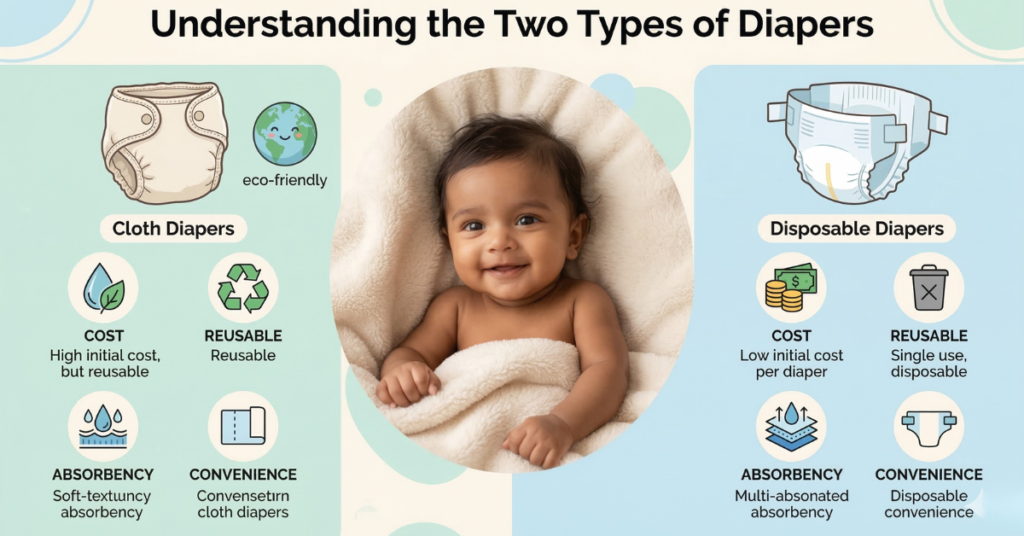
Before comparing cloth diapers vs disposable diapers, it helps to understand how each type works and what makes them different in everyday use.
Disposable Diapers
Disposable diapers are designed for single use and easy disposal. They are made with multiple layers of synthetic materials, including super absorbent polymers that lock moisture away from a baby’s skin. This absorbent technology allows babies to remain dry for longer periods, which can help reduce discomfort and frequent diaper changes.
Modern disposable diapers are much thinner, more absorbent, and better fitting than earlier versions. For many parents managing busy schedules, travel, or daycare routines, disposable diapers offer significant convenience and reliability.
However, disposable diapers contain plastics and synthetic absorbent materials. Because they are thrown away after a single use, they contribute significantly to landfill waste, raising environmental concerns for many families.
Cloth Diapers
Cloth diapers have evolved considerably and are no longer limited to traditional cotton squares. Most modern cloth diaper systems typically include two main components:
• A waterproof outer cloth cover
• An absorbent fabric insert
The insert absorbs moisture, while the outer cover helps prevent leaks. After use, the diaper can be washed, dried, and reused multiple times.
Because they are reusable, cloth diapers are often considered among the most eco-friendly diapers for babies. Many families purchase a set of cloth diapers that can last for months or even years, making them a sustainable option for long term use.
Environmental Impact: Why Many Parents Consider Cloth Diapers
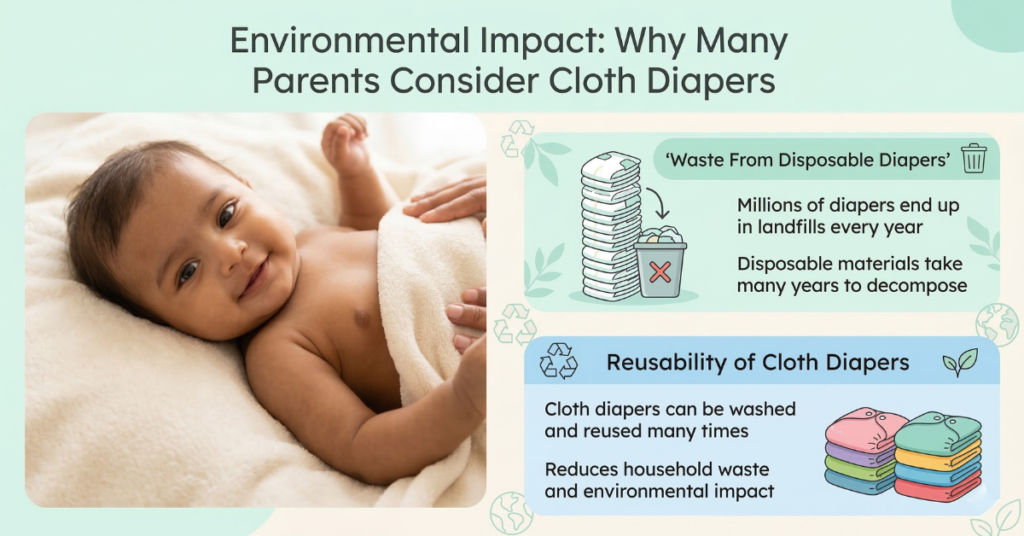
One of the main reasons families explore eco-friendly diapers for babies is the growing concern about environmental sustainability. Diaper choices can have a significant impact on household waste over the first few years of a child’s life.
- Waste From Disposable Diapers
Disposable diapers are one of the largest contributors to household waste. Since each diaper is used only once, the total waste generated during early childhood is substantial.
A single baby may produce over a ton of diaper waste before toilet training. Because disposable diapers contain plastics and synthetic absorbent chemicals, they can take hundreds of years to decompose in landfills.
Manufacturing these diapers also requires raw materials, water, and energy, adding to their environmental footprint.
- Reusability of Cloth Diapers
Cloth diapers reduce waste primarily because they can be reused hundreds of times. Most families require around 40 to 50 cloth diapers during the diapering period.
With proper care, these diapers may last for one to two years or longer. Some families even reuse them for younger siblings or pass them on to others.
Although washing cloth diapers does require water and energy, the overall waste production is significantly lower. For parents looking for eco-friendly diapers for babies, reusable cloth systems offer a practical solution.
This reusable approach significantly reduces household waste and makes cloth diapers one of the more environmentally sustainable diapering options available.
Baby Skin Health and Comfort
Beyond environmental considerations, parents often ask which is better cloth or disposable diapers when it comes to skin health.
Disposable Diapers and Skin Reactions
Disposable diapers use chemical absorbents that lock away moisture. This helps keep babies dry and can reduce the frequency of diaper changes.
However, in some children, synthetic materials, fragrances, or dyes may lead to skin irritation. Pediatric clinics commonly see cases of diaper rash triggered by prolonged moisture, friction, or sensitivity to certain diaper components.
In humid climates such as Mumbai, these factors can sometimes increase the risk of rashes.
Cloth Diapers and Natural Materials
Cloth diapers are typically made from natural fabrics such as cotton, bamboo, or hemp. These materials are breathable and gentle on sensitive skin.
Because they do not contain synthetic absorbent gels, cloth diapers allow more airflow around the baby’s skin. Many parents feel this reduces irritation and supports healthier skin.
However, cloth diapers must be changed frequently and washed properly to maintain hygiene.
Cost Considerations for Families
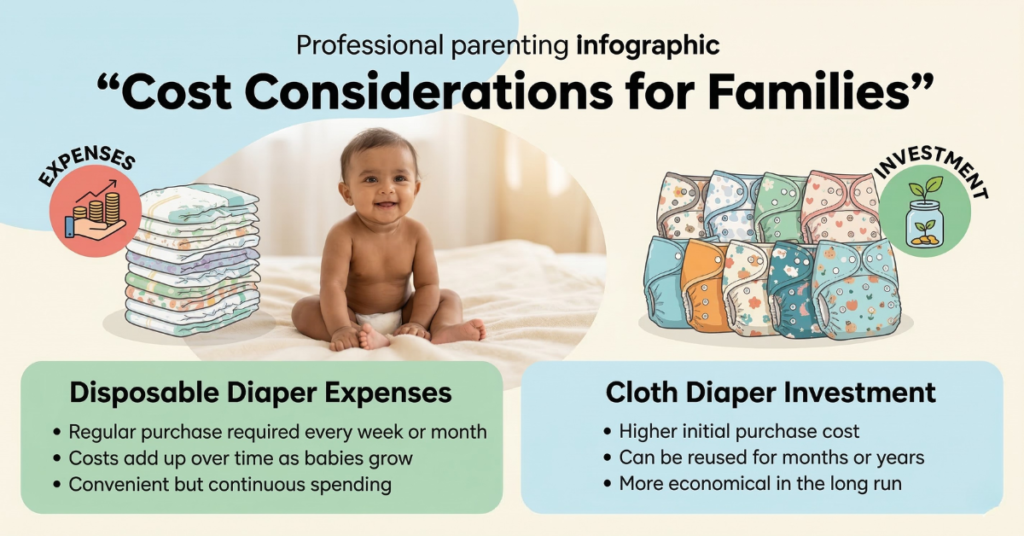
Another important factor when comparing cloth diapers vs disposable diapers is cost.
Disposable Diaper Expenses
Disposable diapers appear affordable initially because they are purchased in small quantities. However, the cost accumulates over time. Many families spend thousands of rupees each year on diapers alone.
When additional items such as wipes, diaper creams, and disposal systems are included, the total cost can increase further.
Cloth Diaper Investment
Cloth diapers require a larger upfront purchase. A complete set may cost more at the beginning, but these diapers can be reused for many months.
Over time, reusable systems often reduce diapering expenses significantly. Families who plan to have multiple children may benefit even more from the long-term savings.
Practical Advice From a Pediatric Perspective
When discussing which is better, cloth or disposable diapers, it is important to remember that both options can work well when used properly.
Parents should focus on a few essential principles:
• Change diapers frequently to prevent prolonged moisture exposure
• Maintain proper hygiene and washing routines
• Choose diapers that fit the baby comfortably
• Monitor the baby’s skin for signs of irritation
Many families find success using a balanced approach. Cloth diapers can be used at home during the day, while disposable diapers may be convenient for nighttime or travel.
This flexible strategy allows parents to enjoy the environmental benefits of cloth diapers while maintaining convenience when needed.
When Cloth Diapers May Be a Good Option
Parents may consider cloth diapers if they:
• Want to reduce environmental waste
• Prefer natural materials against baby skin
• Are comfortable with washing routines
• Are looking for long-term cost savings
These reasons often lead parents to explore eco friendly diapers for babies.
When Disposable Diapers May Be More Practical
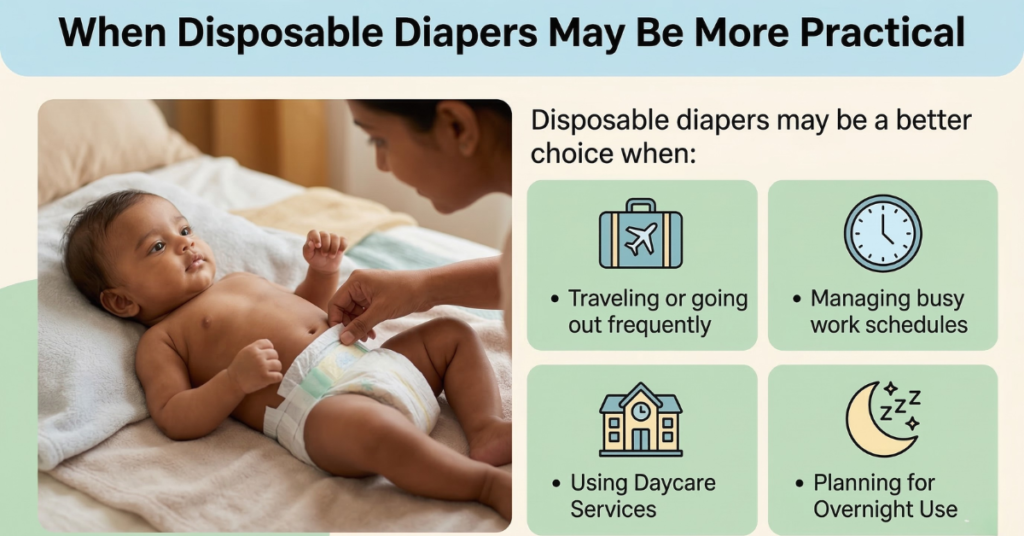
Disposable diapers may be a better choice when:
• Traveling or going out frequently
• Managing busy work schedules
• Using daycare services
• Needing longer overnight absorbency
The decision between disposable diapers vs cloth diapers should always align with the family’s daily routine and comfort level.
Conclusion: Finding the Right Balance for Your Baby
The debate around cloth diapers vs disposable diapers does not have a single correct answer.
Cloth diapers provide environmental benefits and natural materials, while disposable diapers offer unmatched convenience.
For many families, the most practical solution is a flexible approach that combines both options depending on the situation.
What matters most is ensuring that your baby stays clean, comfortable, and healthy.
If you are unsure which is better cloth or disposable diapers for your baby, discussing your child’s needs with a pediatrician can help you make the best decision.
Have questions about baby skin care, diaper rash, or choosing the right diaper? Schedule a consultation at Vivasvan Child Care Clinic for trusted pediatric guidance.
FAQs
Both options have benefits. Cloth diapers are reusable and environmentally friendly, while disposable diapers provide greater convenience and absorbency. The best choice depends on your baby’s skin sensitivity and your lifestyle.
Cloth diapers made from natural fabrics like cotton or bamboo can be gentler on sensitive skin. However, they must be changed frequently and washed properly to maintain hygiene.
Modern disposable diapers are generally safe, but some babies may develop skin irritation from fragrances, dyes, or synthetic materials. Monitoring for rashes and changing diapers regularly helps prevent problems.
Yes, cloth diapers are often considered eco friendly diapers for babies because they are reusable and produce significantly less landfill waste compared with disposable diapers.
Yes. Many families use a hybrid approach, using cloth diapers at home and disposable diapers during travel or nighttime for convenience.

Vivasvan Parekh
As a pediatrician and child specialist based in Mumbai, I bring over 15 years of experience in delivering comprehensive child healthcare. I hold an MD in Pediatrics and practice in Ghatkopar East and Chembur, where I focus on preventive and evidence-based pediatric care. My areas of expertise include vaccinations, newborn care, growth and development monitoring, and the treatment of common and complex childhood illnesses. I am committed to supporting parents with practical, reliable guidance on child health, nutrition, and overall well-being. Through my blog, I share trusted insights on pediatric health, helping parents make informed decisions about their child’s care and development.