
Eczema, cradle cap, and heat rash are three of the most common baby skin conditions, and all three are usually harmless and manageable with simple home care. Eczema causes dry, itchy patches, cradle cap creates greasy scalp scales without any real discomfort, and heat rash shows up as tiny bumps from blocked sweat glands. Most clear up on their own without needing medication.
At a glance:
- Eczema: dry, red, itchy patches, often on the cheeks, elbows, or knees, and it can look different on darker skin tones
- Cradle cap: greasy, scaly scalp patches that aren’t itchy or painful, usually clearing within the first year
- Heat rash: tiny bumps in skin folds or under tight clothing, worse in heat and humidity
- Call a pediatrician if a rash looks infected, oozing, or comes with fever or a generally unwell baby
The Yellow Flakes That Alarm Every New Parent
A parent once noticed yellow, flaky patches on her newborn’s scalp during a bath and immediately assumed something was wrong. It wasn’t. It was cradle cap, one of the most common and genuinely harmless things a baby’s skin does in the first few months of life, and it’s also one of the most frequent reasons new parents reach out between scheduled checkups.
Eczema, cradle cap, and heat rash together account for a huge share of those early skin worries, and all three tend to look more alarming than they actually are. This guide walks through what each one looks like, what genuinely helps, and the specific signs that mean a rash is worth a proper look rather than more home care.
Eczema in Babies: What It Looks Like and What Helps
Eczema shows up as dry, red, scaly, and often quite itchy patches of skin, most commonly on the cheeks, forehead, outer elbows, knees, or trunk.
Eczema Looks Different on Different Skin Tones
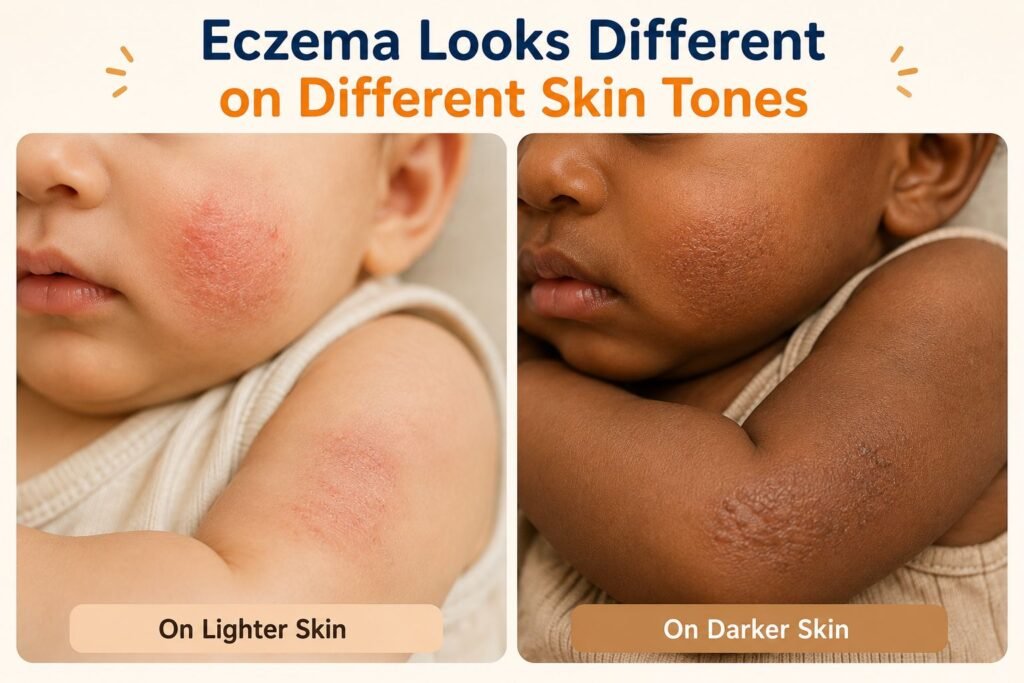
On lighter skin, eczema typically appears red. On darker skin tones, the same patches can look purple, brown, or grey instead, which genuinely matters for recognizing it early rather than mistaking it for something else entirely.
What Causes Baby Eczema?
It’s often linked to a family history of eczema, allergies, or asthma, though not always, and there’s no single identified cause. Most babies genuinely grow out of it as they get older.
How to Treat Eczema in Babies
- Apply a thick, fragrance free moisturizer often, especially right after a bath while the skin is still a little damp
- Dress the baby in soft, breathable cotton, avoiding wool or synthetic fabrics that tend to irritate sensitive skin
- Avoid harsh soaps, and keep bath time on the shorter side rather than long soaks
- Keep the room from getting too warm, since overheating tends to make flare ups worse
- A doctor may prescribe a mild steroid cream for flare ups that don’t settle with moisturizing alone
Eczema is also just one of several skin and hair related surprises that catch new parents off guard in the early months. For a broader look at why babies develop unexpected body hair, rashes, or unusual eating patterns, this pediatrician explained guide covers some of the other common surprises worth knowing about.
Cradle Cap: Why It Happens and How to Manage It
Cradle cap is a greasy, scaly buildup on a baby’s scalp caused by seborrheic dermatitis, and despite how it looks, it isn’t itchy, painful, or contagious.
What Does a Cradle Cap Look Like?
Thick, greasy, yellow, brown, or white flaky patches, mostly on the scalp but sometimes spreading to the eyebrows, eyelids, or behind the ears.
How to Treat Cradle Cap at Home
- Wash the scalp with a mild baby shampoo, daily washing helps prevent buildup, though washing too often can dry the scalp out instead
- Gently loosen flakes with a soft brush or cloth during bath time
- A small amount of baby oil can help soften stubborn scales before brushing, shampooed out about an hour later
- Most cases clear on their own by the time a baby turns one, and a doctor visit is only needed if the flakes persist or spread significantly despite consistent home care
Since cradle cap involves the scalp specifically, it’s also worth knowing what actually helps versus what can make things worse when it comes to oils and scalp products. This guide to hair oil and baby scalp care covers exactly how much oil is genuinely helpful and when it starts working against the skin instead.
Heat Rash: Why Mumbai’s Climate Makes This Common
Heat rash appears as tiny raised red or clear bumps when blocked sweat glands trap sweat under the skin, and it shows up especially often during Mumbai’s hot, humid months.
Where Heat Rash Typically Shows Up
Neck, chest, back, and skin folds, essentially anywhere sweat gets trapped against the skin, made worse by tight clothing or extra layers.
How to Cool a Baby Down Quickly

- Remove extra layers immediately and move to a cooler space
- Keep the skin dry rather than applying heavy ointments or petroleum jelly, which can block pores further and make it worse
- Dress in loose, breathable cotton, especially during Mumbai’s monsoon and summer stretches when humidity keeps sweat from evaporating easily
Eczema vs Cradle Cap vs Heat Rash: A Quick Comparison
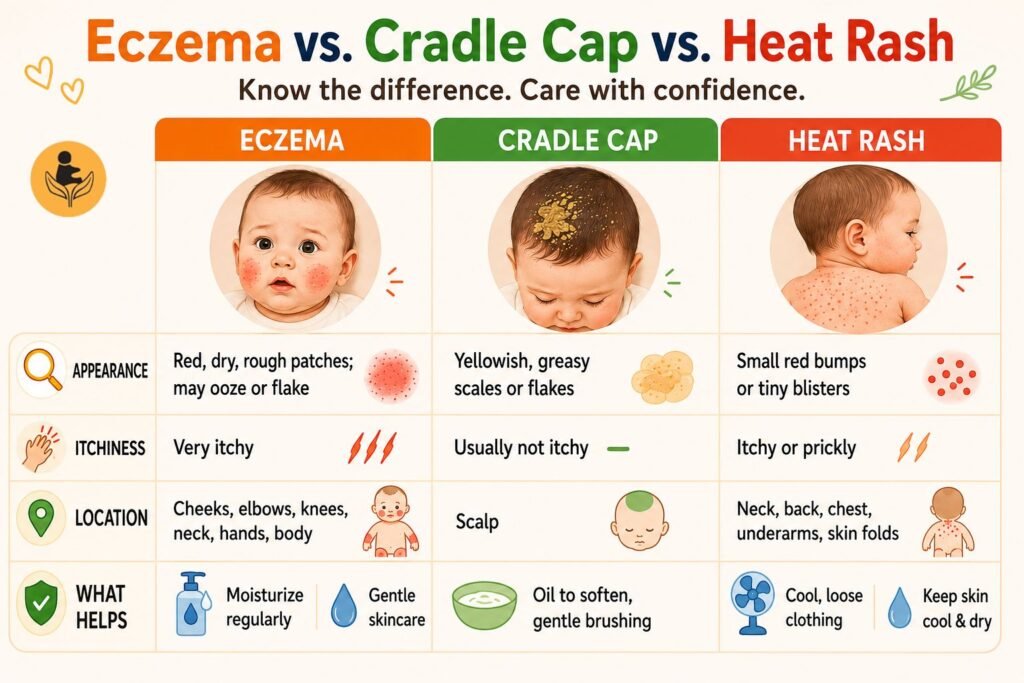
These three conditions can look fairly similar to a worried parent at a glance, but they behave quite differently underneath.
| Condition | What It Looks Like | Is It Itchy? | Typical Location | What Helps |
| Eczema | Dry, red, scaly patches (purple, brown, or grey on darker skin) | Yes, often very itchy | Cheeks, elbows, knees, trunk | Frequent moisturizer, cotton clothing, avoiding harsh soap |
| Cradle Cap | Greasy, scaly, yellow or white flakes | No | Scalp, sometimes eyebrows or behind ears | Mild shampoo, gentle brushing, occasional oil |
| Heat Rash | Tiny red or clear raised bumps | Sometimes mildly prickly | Neck, chest, back, skin folds | Cooling down, loose clothing, keeping skin dry |
When a Rash Needs More Than Home Care
- The baby has a fever or seems generally unwell, not just uncomfortable
- The rash looks wet, oozing, or has developed a crusted, golden or honey colored coating
- There’s visible swelling, spreading redness, or the skin feels warm and tender to the touch
- A rash appears alongside difficulty breathing, unusual drowsiness, or doesn’t fade under gentle pressure, all of which need immediate medical attention rather than a routine appointment
- Cradle cap or eczema isn’t improving despite a couple of weeks of consistent home care
Practical Guidance for Parents
- Safe to do at home: consistent moisturizing for eczema, gentle scalp care for cradle cap, quick cooling and looser clothing for heat rash, and patience, since all three conditions typically improve gradually rather than overnight.
- Best avoided: harsh soaps or fragranced products on eczema prone skin, aggressive scraping or picking at cradle cap flakes, and heavy ointments or petroleum jelly on heat rash, which can trap heat rather than help release it.
- A common misconception worth clearing up: that cradle cap means poor hygiene. It doesn’t. It’s a common, harmless response tied to overactive oil glands in early infancy, not a sign that anything’s being done wrong.
The Takeaway
Eczema, cradle cap, and heat rash are three of the most common things a baby’s skin does in the first year, and none of them reflect anything a parent did or didn’t do. Most respond well to simple, consistent care at home, and the short list of red flags above is what actually separates routine skin changes from something worth a same day visit.
For a rash that isn’t responding to home care, or simply needs a second opinion, booking a consultation at Child Care Clinic Mumbai is a straightforward next step.
Frequently Asked Questions
Eczema typically appears as dry, red, scaly patches, most often on the cheeks, elbows, or knees. On darker skin tones, the same patches can look purple, brown, or grey instead of the more commonly pictured red. It tends to be itchy, and scratching can occasionally lead to irritation or infection if left unmanaged.
Not quite, though they’re related. Cradle cap is a form of seborrheic dermatitis common in babies, showing up as greasy, thick, yellow or white scales on the scalp. Unlike dandruff, it isn’t itchy or uncomfortable, and it usually resolves on its own within the first year without needing any real treatment.
Heat rash usually clears within a few days once a baby is cooled down and dressed in lighter, breathable clothing. Keeping the affected skin dry and out of heavy ointments helps it resolve faster rather than lingering.
A rash is worth a doctor’s visit if it comes with fever, looks oozing or crusted, shows spreading redness or swelling, or simply isn’t improving after a couple of weeks of consistent home care. A rash paired with difficulty breathing or unusual drowsiness needs immediate medical attention.

Vivasvan Parekh
As a pediatrician and child specialist based in Mumbai, I bring over 15 years of experience in delivering comprehensive child healthcare. I hold an MD in Pediatrics and practice in Ghatkopar East and Chembur, where I focus on preventive and evidence-based pediatric care. My areas of expertise include vaccinations, newborn care, growth and development monitoring, and the treatment of common and complex childhood illnesses. I am committed to supporting parents with practical, reliable guidance on child health, nutrition, and overall well-being. Through my blog, I share trusted insights on pediatric health, helping parents make informed decisions about their child’s care and development.