
Quick Overview:
Most coughs and colds in children are caused by common viral infections that resolve on their own within 7 to 10 days with rest, fluids, and simple home care. A doctor visit is needed if a child has difficulty breathing, a persistent high fever, a cough lasting beyond three weeks, or signs of dehydration.
- The average child gets 6 to 8 colds a year, especially before age 6 this is normal, not a sign of a weak immune system.
- Most cold symptoms peak by day 3–4 and improve within a week to ten days.
- Honey (for children over 1 year), fluids, and saline drops are among the few home remedies with real evidence behind them.
- Cough medicines aren’t recommended for young children and haven’t been shown to work better than home care.
- Fast or laboured breathing, blue lips, or a fever lasting more than 3 days are reasons to see a doctor promptly.
The 2 A.M. Cough That Sends Every Parent Into a Spiral
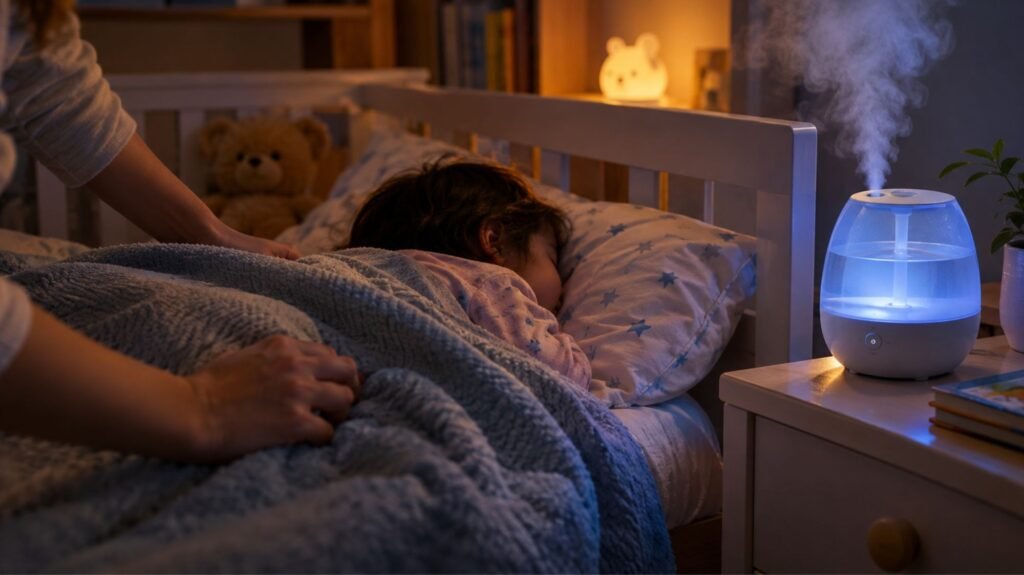
There’s a particular kind of parental alertness that kicks in the moment a child starts coughing at night half-asleep, straining to hear whether it sounds like “just a cold” or something that needs an emergency room. It’s one of the most common reasons parents bring a child in for an unscheduled visit, and also one of the most reassuring conversations to have, because the vast majority of the time, the answer is genuinely ordinary.
Children, particularly those under 6, catch colds far more often than adults somewhere between 6 and 8 a year is considered typical, not a sign that something is wrong with their immunity. Their immune systems are simply encountering viruses for the first time, over and over, as they build up a library of resistance that adults built years ago. That doesn’t make a 2 a.m. coughing fit any less stressful to sit through, but it does help to know where the line actually sits between “this needs home care” and “this needs a doctor.”
This piece walks through what’s typically happening during a child’s cough and cold, which home remedies are actually worth trying, and the specific signs that mean it’s time to stop waiting and get it checked.
What Causes Most Cough and Cold in Children?
The vast majority of cough and cold in children comes from common respiratory viruses, rhinovirus being the most frequent culprit spread easily through daycare, school, and close family contact. These infections typically run their course in 7 to 10 days, with symptoms peaking around day 3 or 4 before gradually easing.
Cold Symptoms in Children: What’s Typical
A typical childhood cold usually includes a runny or blocked nose, mild sore throat, sneezing, a low-grade fever, and a cough that can linger even after other symptoms have cleared. This lingering cough sometimes called a post-viral cough can persist for two to three weeks after the rest of the cold has resolved, which often worries parents more than it needs to.
Why Does the Cough Always Seem Worse at Night?
Child coughing at night is usually worse simply because lying flat allows mucus from the nose and sinuses to drain down the back of the throat, triggering more coughing than during the day when the child is upright. Cooler night air and, in some cases, mild airway irritation from post-nasal drip also contribute. Propping a young child’s head slightly higher with an extra pillow (for children old enough to safely use one) and using a cool-mist humidifier in the room can meaningfully reduce nighttime coughing without any medication involved.
What Home Remedies Actually Help With Cough and Cold?

Only a handful of home remedies for cough and cold in children have real evidence behind them, most others are harmless but don’t do much, and a few are worth actively avoiding.
What Genuinely Helps
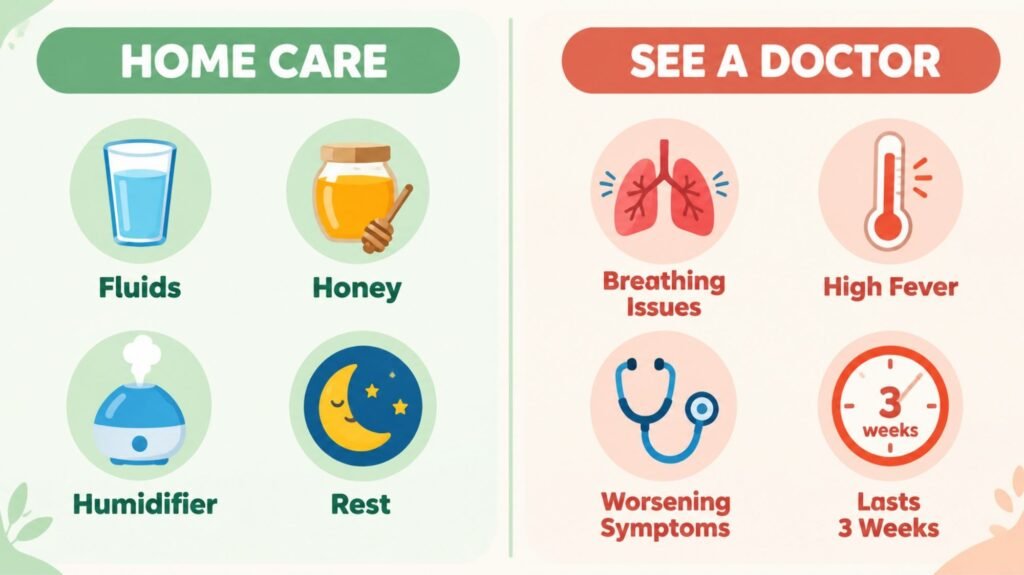
- Fluids: Warm fluids like clear soups or diluted juice soothe the throat and help thin mucus, making it easier to clear.
- Honey: For children over 1 year old, a small amount of honey before bedtime has been shown in studies to reduce nighttime cough frequency about as well as some over-the-counter cough syrups and with fewer downsides.
- Saline nasal drops: These loosen mucus in a blocked nose, particularly useful for infants and toddlers who can’t blow their own nose yet.
- Steam or a cool-mist humidifier: Both help ease congestion and soothe an irritated throat, particularly overnight.
- Rest: Simple, but genuinely one of the most effective things a sick child’s body needs to recover.
What to Avoid
Honey should never be given to a child under 12 months, due to the risk of infant botulism. Over-the-counter cough and cold medicines aren’t recommended for children under 4, and their benefit even in older children is limited; most pediatric guidelines don’t recommend them as a first-line approach. Steam inhalation using very hot water or direct exposure to strong vapours (like camphor rubs applied near the nose) can also cause burns or breathing irritation in young children and is best avoided.
Toddler Cough and Cold vs Something More Serious
| Symptom | Usually Just a Cold | Worth a Doctor’s Visit |
| Runny nose, mild cough | Yes | — |
| Fever under 100.4°F (38°C), lasting 1–2 days | Yes | — |
| Fever above 102°F (38.9°C) or lasting more than 3 days | — | Yes |
| Mild, occasional coughing | Yes | — |
| Fast or laboured breathing, visible chest retractions | — | Yes, urgently |
| Cough lasting more than 3 weeks | — | Yes |
| Normal appetite and activity level despite symptoms | Yes | — |
| Lethargy, refusal to drink fluids, fewer wet diapers | — | Yes |
| Bluish tint to lips or face | — | Yes, emergency |
When to See a Doctor for a Child’s Cough
A doctor visit is warranted when a child shows difficulty breathing, a high fever that persists beyond three days, signs of dehydration, or a cough that continues well past the typical two-to-three-week window for a post-viral cough. Trusting a gut feeling that “something’s different this time” is also reason enough to get it checked, parents are often better at noticing subtle changes in their own child than any symptom checklist can capture.
Warning Signs That Need Prompt Medical Attention
- Breathing that looks fast, laboured, or involves visible pulling in at the ribs or neck
- Bluish tint around the lips, face, or fingertips
- A fever above 102°F (38.9°C), or any fever in an infant under 3 months
- Persistent vomiting, or signs of dehydration such as no wet diaper in 8 hours
- Unusual lethargy, difficulty waking, or a child who is inconsolable
- A cough lasting longer than three weeks without improvement
- Wheezing or a whistling sound while breathing
How Long Does a Child’s Cold Usually Last?
Most colds in children resolve within 7 to 10 days, though the cough component can trail on for an additional one to two weeks even after other symptoms have cleared. A cold that shows no improvement after 10 days, or one that seems to be getting worse rather than better after the first few days, is worth a follow-up rather than continued waiting.
Practical Guidance for Managing Cough and Cold at Home
Worth doing: Offering fluids frequently, using a cool-mist humidifier at night, and keeping a simple log of fever readings and symptoms if things seem to be dragging on makes a doctor’s visit, if needed, much more useful.
Worth avoiding: Giving over-the-counter cough and cold medication to children under 4, using honey for infants under 1 year, and assuming a lingering cough always needs antibiotics most childhood coughs are viral, and antibiotics don’t work against viruses.
When to seek prompt evaluation: Difficulty breathing, a fever lasting more than three days, signs of dehydration, or a cough that continues beyond three weeks.
Realistic expectations: Frequent colds in early childhood are normal and expected, not a sign of poor health or a weak immune system most resolve with basic supportive care and don’t need medication to run their course.
For related reading, parents can check Child Care Clinic Mumbai’s guidance on vaccination and immunisation, which covers how routine vaccines reduce the frequency and severity of several respiratory illnesses, and on child nutrition counselling for supporting recovery and immunity through diet. Parents dealing with a high fever alongside a cold may also find the clinic’s article on febrile seizures in children useful.
Conclusion
Cough and cold in children is, in almost every case, a routine part of early childhood rather than a cause for alarm, a young immune system doing exactly what it’s supposed to do. Fluids, rest, saline drops, and a little patience handle most of it, and knowing the specific signs that call for a doctor’s visit breathing trouble, a persistent high fever, or a cough that overstays its welcome makes the rest of it far less stressful to manage.
Any parent unsure whether a current cough or cold falls within the ordinary range, or simply looking for reassurance during a rough night, doesn’t need to wait it out alone. A visit to Child Care Clinic Mumbai can settle the question quickly and make sure the right care happens at the right time.
FAQ
Most colds resolve within 7 to 10 days, though the cough itself can linger for one to two additional weeks even after other symptoms have cleared.
A doctor’s visit is needed if breathing looks fast or laboured, if fever persists beyond three days, if the cough lasts more than three weeks, or if the child shows signs of dehydration or unusual lethargy.
Over-the-counter cough and cold medicines aren’t recommended for children under 4, and most pediatric guidelines advise against them even for older children, since evidence of real benefit is limited.
Lying flat allows mucus to drain down the back of the throat, which triggers more frequent coughing at night than during the day; elevating the head slightly and using a humidifier can help.
Yes, for children over 1 year old a small amount of honey before bedtime has been shown to reduce nighttime cough. It should never be given to infants under 12 months due to the risk of botulism.

Vivasvan Parekh
As a pediatrician and child specialist based in Mumbai, I bring over 15 years of experience in delivering comprehensive child healthcare. I hold an MD in Pediatrics and practice in Ghatkopar East and Chembur, where I focus on preventive and evidence-based pediatric care. My areas of expertise include vaccinations, newborn care, growth and development monitoring, and the treatment of common and complex childhood illnesses. I am committed to supporting parents with practical, reliable guidance on child health, nutrition, and overall well-being. Through my blog, I share trusted insights on pediatric health, helping parents make informed decisions about their child’s care and development.