
Quick Overview:
Most minor head bumps in toddlers from a fall off a low sofa or a stumble while running don’t need a doctor visit and can be safely watched at home. Emergency care is needed if a toddler loses consciousness, vomits repeatedly, seems unusually drowsy, has a seizure, or shows worsening symptoms in the hours after the fall.
- Toddlers fall constantly as they learn to walk, run, and climb most bumps to the head are minor.
- A brief cry followed by a return to normal play is generally reassuring.
- Repeated vomiting, unusual drowsiness, or a seizure after a head bump need urgent medical attention.
- Close observation for 24 hours is standard advice after any head bump, even a mild one.
- A hard fall from height, onto a hard surface, or involving a car should always be checked by a doctor, regardless of symptoms.
The Fall That Stops Every Parent’s Heart
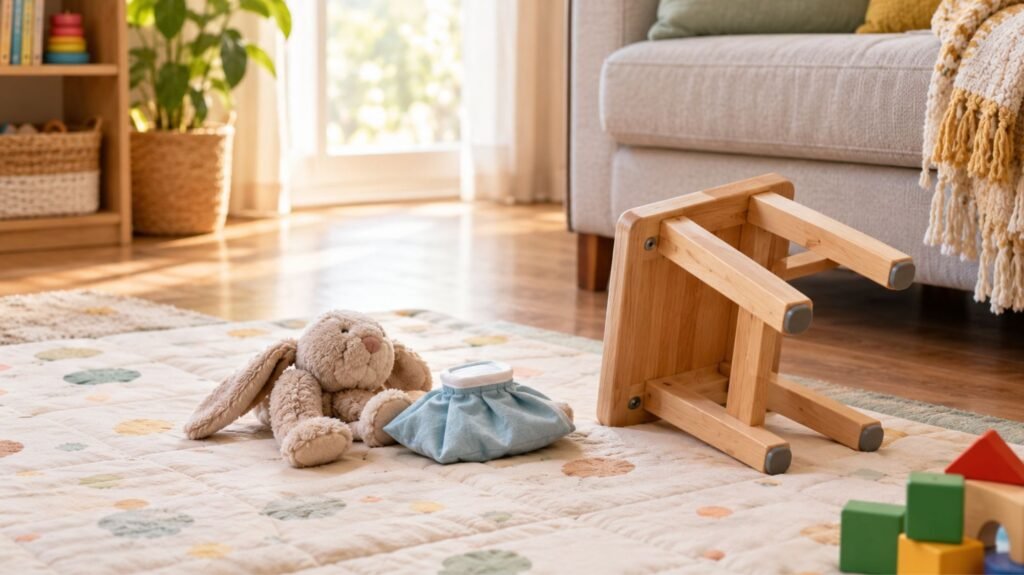
It happens in a split second a toddler standing on a chair, reaching for something just out of reach, and then the unmistakable thud that makes every parent in the house freeze before they’ve even turned around. What follows next matters more than the fall itself: is the cry immediate and loud, or is there a pause first? Does the child sit up and reach for a toy within a minute, or do they seem dazed?
Head bumps are, statistically, one of the most common injuries in toddlerhood a direct consequence of a stage in life defined by climbing, running, and testing balance long before coordination has fully caught up. The overwhelming majority turn out to be nothing more than a scare and maybe a bruise. But a small number of falls do need medical attention, and knowing the difference in the moment rather than guessing makes a genuinely stressful situation far easier to manage.
This piece walks through what typically happens after a toddler’s head injury, which symptoms are reassuring, which ones need urgent care, and how to watch a child safely over the following day.
Is a Bump on the Head Toddler Injury Usually Serious?
Most bumps on the head in toddlers are minor and don’t require a doctor visit, particularly when the fall was from a low height a sofa, a bed, or while running on a flat surface and the child cries immediately, calms down within a few minutes, and returns to normal play and behaviour afterward.
What “Normal After a Fall” Actually Looks Like
A toddler who cries right away, is consolable within several minutes, wants to be held briefly and then returns to playing, eating, and behaving as usual is showing the pattern seen in the vast majority of minor head bumps. A small bump or bruise (sometimes called a “goose egg”) at the site of impact is common and, on its own, isn’t a cause for alarm swelling under the scalp often looks more dramatic than it actually is.
What Are the Signs of Concussion in Toddlers?
Signs of concussion in toddlers include unusual drowsiness, repeated vomiting, irritability that doesn’t settle, loss of balance beyond their usual toddling, and in more obvious cases, a brief loss of consciousness at the time of the fall. Because toddlers can’t describe symptoms like headache or dizziness the way an older child or adult can, behaviour change is often the clearest signal something needs to be checked.
Behaviour Changes Worth Watching For
- Unusual sleepiness or difficulty waking up
- Being harder to console than usual, or unusually withdrawn
- Loss of interest in favourite toys or activities shortly after the fall
- New unsteadiness when walking that wasn’t there before the fall
- Repeated vomiting (more than once or twice)
When to Take a Child to the Doctor After a Head Injury
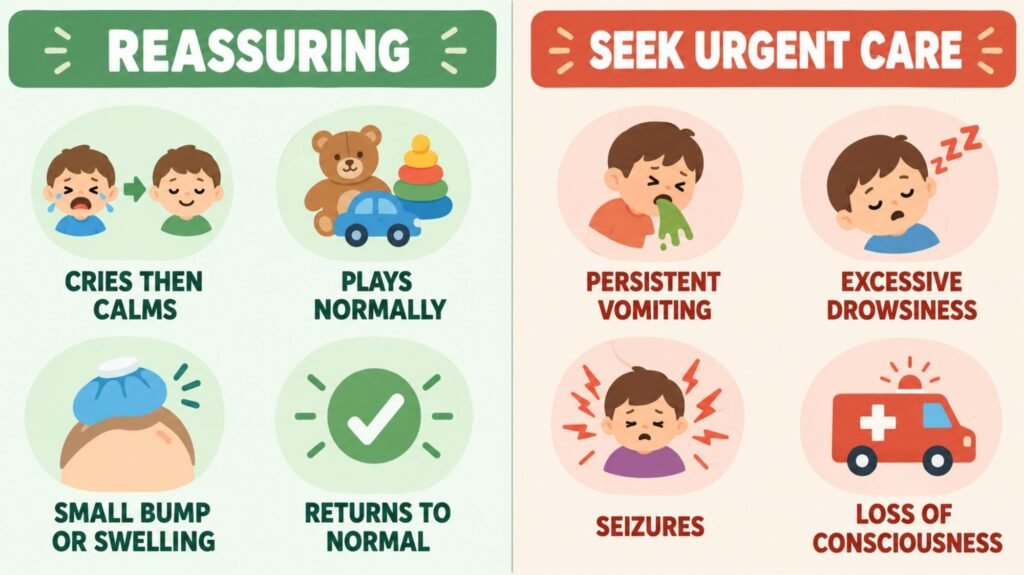
A child should be seen by a doctor after a head injury if there was any loss of consciousness, if vomiting happens more than once or twice, if the child seems unusually drowsy or difficult to wake, if a seizure occurs, or if the fall involved a significant height, a hard or sharp surface, or a vehicle. A large or rapidly swelling bump, a soft spot that appears to bulge (in infants), or any clear fluid or blood coming from the nose or ears after the injury also warrants prompt evaluation.
Emergency Warning Signs That Need Immediate Care
- Loss of consciousness, even briefly
- Vomiting after a head injury toddler episodes that repeat more than once or twice
- A seizure or convulsion following the fall
- Unusual drowsiness, confusion, or difficulty waking the child
- Unequal pupil size, or eyes that won’t track normally
- Blood or clear fluid leaking from the nose or ears
- A soft spot on an infant’s head that looks swollen or bulges outward
- Any weakness, unusual clumsiness, or trouble using an arm or leg after the fall
If any of these appear, it’s worth treating as an emergency and seeking immediate medical care rather than waiting to see if it passes.
Toddler Head Injury: What’s Reassuring vs What Needs Urgent Care
| Symptom After the Fall | Usually Reassuring | Needs Urgent Medical Care |
| Immediate crying, consoled within minutes | Yes | — |
| Small bump or bruise at the site of impact | Yes | — |
| Returns to normal play within 15–30 minutes | Yes | — |
| Vomits once shortly after the fall, then seems fine | Often just the shock/crying | Watch closely; repeat vomiting needs care |
| Loses consciousness, even briefly | — | Yes, emergency |
| Vomits more than once or twice | — | Yes |
| Unusually drowsy or hard to wake | — | Yes, emergency |
| Seizure or convulsion | — | Yes, emergency |
| Normal appetite, alertness, and coordination hours later | Yes | — |
| New unsteadiness or arm/leg weakness | — | Yes |
How Long Should a Toddler Be Watched After Hitting Their Head?
Close observation for 24 hours is the standard, sensible approach after any head bump, even one that looks minor at first. This doesn’t mean keeping a toddler awake all night. Normal sleep is fine but it does mean checking on them periodically, watching their behaviour the following morning, and staying alert to any of the warning signs above, since some symptoms can take a few hours to become noticeable.
Waking a Sleeping Toddler After a Head Bump
For a genuinely minor bump with no concerning symptoms beforehand, it’s generally fine to let a toddler sleep normally rather than waking them every hour through the night, though checking in once or twice to confirm they’re breathing normally and reusable is a reasonable middle ground for extra peace of mind. If the fall was more significant or any warning signs were present, a doctor’s specific advice on monitoring should be followed instead.
Preventing Head Injuries in Toddlers at Home
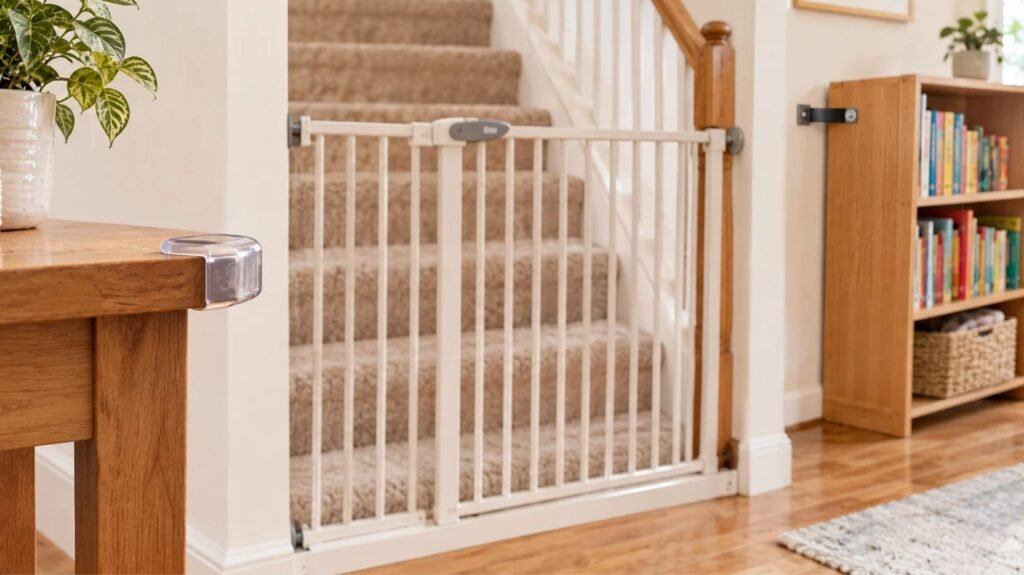
Most falls happen during ordinary moments climbing onto furniture, running on a wet floor, or reaching for something from a chair which makes a few simple household adjustments genuinely effective. Securing furniture that could tip, using safety gates at the top and bottom of stairs, keeping floors free of loose rugs on hard surfaces, and supervising bath time and playground climbing closely all reduce the frequency and severity of falls without needing to restrict a toddler’s natural curiosity entirely.
Practical Guidance for Parents After a Head Bump
Worth doing: Staying calm and observing the child’s behaviour closely for the following 24 hours, applying a cold compress to reduce swelling at the bump site, and keeping a simple note of the time of the fall and any symptoms that follow.
Worth avoiding: Giving pain medication before consulting a doctor if there’s any uncertainty about the injury’s severity, and dismissing a change in behaviour as “just tiredness” without considering it could be related to the fall.
When to seek immediate medical attention: Loss of consciousness, repeated vomiting, a seizure, unusual drowsiness or confusion, or any weakness or loss of coordination following the fall.
Realistic expectations: The overwhelming majority of toddler head bumps resolve without any lasting effect, and a period of close observation is usually all that’s needed but any of the warning signs above should be taken seriously rather than watched and waited on.
For related reading, parents can also check Child Care Clinic Mumbai’s article on febrile seizures in children, useful context if a seizure occurs for any reason, and can reach out directly through booking a consultation for any injury that feels uncertain.
Conclusion
A toddler head injury is one of the more alarming moments in early parenting, largely because it happens without warning and forces a quick judgment call. The good news is that most falls, the kind that end in a loud cry, a quick cuddle, and a return to play don’t need anything more than a bit of observation and a cold compress. What matters is knowing the small set of warning signs, like repeated vomiting, unusual drowsiness, or a seizure, that mean it’s time to stop watching and start seeking care.
Any parent unsure whether a particular fall warrants a doctor’s visit doesn’t need to sit with that uncertainty alone. A quick call or visit to Child Care Clinic Mumbai can help assess the situation and offer clarity, whether that means reassurance or a same-day evaluation.
FAQ
A doctor should be seen if there’s any loss of consciousness, repeated vomiting, unusual drowsiness, a seizure, or if the fall involved significant height, a hard surface, or a vehicle.
A single episode of vomiting shortly after a fall, especially amid crying and distress, is often not a cause for alarm on its own, but vomiting that repeats more than once or twice should be evaluated promptly.*+
Signs of concussion in toddlers include unusual drowsiness, irritability that won’t settle, new unsteadiness when walking, repeated vomiting, or in clear cases, a brief loss of consciousness at the time of the fall.
Not necessarily for a minor bump with no concerning symptoms, normal sleep is fine, though checking on the child once or twice through the night offers extra reassurance. A doctor’s specific advice should be followed for any injury that seems more significant.
Stay calm, comfort the child, check for any cuts or swelling, apply a cold compress to reduce swelling, and observe closely for the following 24 hours, seeking immediate medical care if any warning signs like vomiting, drowsiness, or a seizure appear.

Vivasvan Parekh
As a pediatrician and child specialist based in Mumbai, I bring over 15 years of experience in delivering comprehensive child healthcare. I hold an MD in Pediatrics and practice in Ghatkopar East and Chembur, where I focus on preventive and evidence-based pediatric care. My areas of expertise include vaccinations, newborn care, growth and development monitoring, and the treatment of common and complex childhood illnesses. I am committed to supporting parents with practical, reliable guidance on child health, nutrition, and overall well-being. Through my blog, I share trusted insights on pediatric health, helping parents make informed decisions about their child’s care and development.