
As parents, keeping children healthy is always a top priority. Nutrition, vaccinations, and illness prevention are often the focus, but one silent factor affects well-being every day: the air they breathe. In Indian cities like Mumbai, Delhi, and Pune, elevated pollution levels not only impact the lungs but can also affect a child’s delicate skin.
Air pollution, including fine particulate matter (PM2.5), volatile organic compounds, and other pollutants, can disrupt the skin barrier, causing dryness, irritation, eczema flare-ups, and even premature dullness. Clinicians increasingly see children with skin complaints linked to environmental exposure.
The good news is that simple, consistent home care can make a meaningful difference. This guide shares practical, medically sound skincare and hydration tips to protect your child’s skin throughout the year.
You can also watch this quick Instagram reel for more insights:
Why Children’s Skin Is More Vulnerable to Pollution
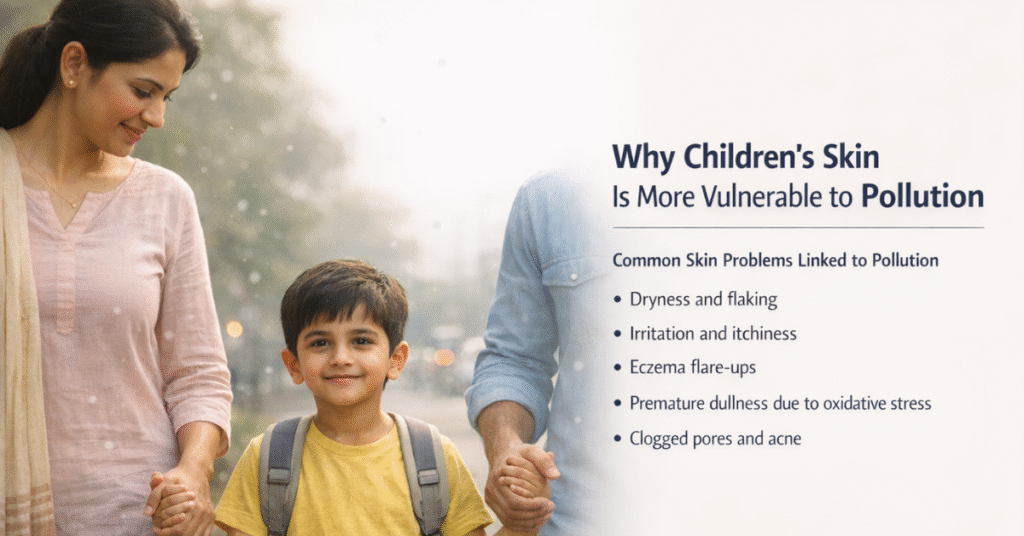
Children’s skin is thinner and more sensitive than adult skin, making it more susceptible to environmental irritants. Their skin barrier is still developing, so pollutants penetrate more easily. Faster breathing and time spent outdoors or in poorly ventilated spaces increase exposure to airborne toxins.
Clinically, children with eczema often experience flare-ups during winter or when air pollution spikes in urban areas. Even minor irritants can trigger redness, itching, or dryness, underscoring the need for proactive skin care.
Common Skin Problems Linked to Pollution
- Dryness and flaking
- Irritation and itchiness
- Eczema flare-ups
- Premature dullness due to oxidative stress
- Clogged pores and acne
Pollutants interact with sweat and natural oils, creating micro-environments that worsen these conditions. Seasonal factors, such as dry winter air or humid monsoon conditions, further challenge skin health.
Daily Skincare Routine for Kids in Pollution
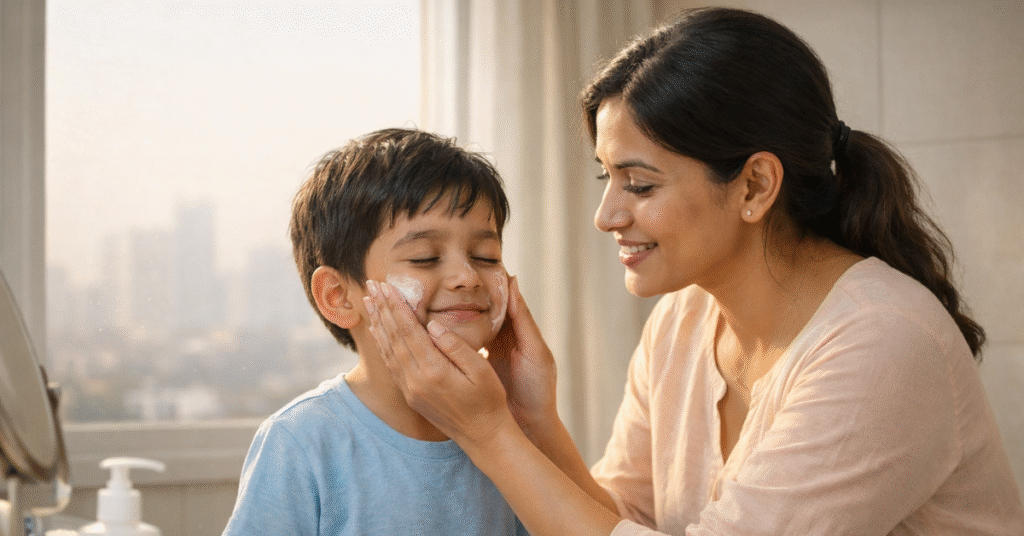
A consistent skincare routine is the first line of defense against environmental damage. A step-by-step approach helps protect and repair delicate skin.
1. Gentle Cleansing
Use a soap-free, hypoallergenic cleanser to remove pollutants and dust without stripping natural oils. After outdoor activities or returning from school, cleanse your child’s face and hands promptly. Avoid harsh soaps, as they can worsen dryness and irritation. This forms the foundation of a daily skincare routine for kids.
2. Hydrating Moisturizers
Apply moisturizer every morning after bathing, and for very dry skin, reapply at night. Ceramide-based creams are especially effective for repairing the skin barrier. In Indian winters, indoor heating or air conditioning can further dry the skin, making consistent moisturization crucial. This is a key part of skincare tips for kids in pollution.
3. Sunscreen Protection
Use a broad-spectrum sunscreen with SPF 30+ every day, even if your child stays mostly indoors. UV rays can accelerate pollution-related oxidative damage. Reapply every 2–3 hours during prolonged outdoor exposure.
4. Antioxidant Support
Topical antioxidants, such as vitamin C or E creams, help neutralize free radicals generated by pollution. Diet is equally important, including antioxidant-rich foods like oranges, papaya, berries, and leafy greens.
5. Barrier Creams
Barrier or environmental shield creams form a protective layer against pollutants. These are especially useful on high-smog days or during outdoor activities, reducing direct exposure to harmful particles.
Hydration Tips for Healthy Child Skin
Hydration is essential for maintaining skin integrity and a natural glow. Both internal and environmental hydration play a role.
1. Encourage Water Intake
Children should drink at least 6–8 glasses of water daily, depending on activity level and climate. Include water-rich fruits such as watermelon, cucumber, and oranges to help flush out toxins naturally. These practices form the foundation of effective hydration tips for healthy child skin.
2. Improve Indoor Air Quality
Using a humidifier during dry winter months helps prevent skin barrier disruption. Air purifiers with HEPA filters reduce indoor particulate matter, dust, and allergens. Keep windows closed on high-pollution or pollen-heavy days to minimize exposure, supporting skin hydration and overall health.
Creating a Pollution-Protected Environment at Home

Even when outdoor air quality cannot be controlled, the home environment can be made safer to protect children’s skin and overall health.
Reduce dust and allergens by sweeping and mopping floors when children are not present, and damp dust walls two to three times a week. Clean bedding regularly, as frequent washing of bed linens prevents dust mite buildup that can irritate skin.
Use air purifiers in bedrooms or play areas, where children spend most of their time. Adding HEPA filters to air conditioning units is a cost-effective way to further improve indoor air quality.
These steps are practical home air pollution control tips that help protect children’s skin from air pollution and support healthy skin year-round.
Seasonal Skincare Tips for Indian Climates
| Season | Skin Concerns | Key Skincare Tips |
| Winter | Dry air, indoor heating/AC further strips moisture | Moisturize every morning and night if needed; use ceramide-based creams for very dry skin |
| Monsoon & Humid Season | Humidity traps sweat and dirt, increasing fungal infections | Dry skin thoroughly after bathing; maintain clean, breathable clothing |
| Summer & Smog Season | UV damage, pollution exposure | Apply broad-spectrum sunscreen, use antioxidants and barrier creams; limit outdoor activities during peak pollution hours (typically morning and evening in urban cities) |
When to Consult a Pediatrician or Dermatologist
While consistent home care goes a long way in protecting children’s skin, there are times when professional guidance becomes essential. Seek a pediatrician or dermatologist if:
- Dryness, rashes, or eczema persist despite proper cleansing, moisturization, and barrier protection
- Allergic reactions are triggered or worsened by pollution, dust, or seasonal changes
- Skin irritation interferes with sleep, play, or daily comfort
- There is uncertainty about which topical treatments, moisturizers, or sunscreens are safe and effective for your child
- Personalized guidance on diet, hydration, or supplements is needed to support skin barrier health
At Vivasvan Parekh Child Care Clinic, families receive tailored advice that accounts for the child’s age, skin type, and local environmental conditions. The clinic also helps identify triggers, optimize skincare routines, and provide practical home strategies to minimize exposure to pollution and allergens. Early evaluation and intervention can prevent recurring flare-ups, reduce discomfort, and promote long-term skin health, giving children the best chance to maintain healthy, resilient skin year-round.
Conclusion
Protecting your child’s skin from pollution is not just about appearance, it is essential for overall health. Gentle cleansing, daily moisturization, antioxidant support, proper hydration, and maintaining a clean home environment together create a strong defense against environmental damage. By adopting these practical habits, parents can help children maintain healthy, resilient, and vibrant skin despite urban pollution challenges.
Take Action
Schedule a consultation at Vivasvan Parekh Child Care Clinic to receive personalized skincare strategies for your child. Small, consistent steps today can prevent long-term skin damage and ensure healthier skin for years to come.
Frequently Asked Questions
1. How does air pollution affect my child’s skin?
Pollutants such as PM2.5 and volatile compounds disrupt the skin barrier, leading to dryness, irritation, eczema flare-ups, and premature dullness.
2. What should a daily skincare routine for kids in polluted cities include?
A complete routine involves gentle cleansing, regular moisturization, broad-spectrum sunscreen, topical or dietary antioxidant support, and barrier creams when needed.
3. How can I keep my child’s skin hydrated during winter and smog-heavy seasons?
Use ceramide-based moisturizers, ensure adequate water intake, include water-rich fruits like watermelon and cucumber, and maintain indoor humidity with a humidifier.
4. Are air purifiers effective in protecting my child’s skin from pollution?
Yes. HEPA-based air purifiers reduce indoor dust, allergens, and particulate matter, complementing skincare routines and helping maintain a healthier skin environment.
5. When should I consult a pediatrician or dermatologist?
Seek professional advice if dryness, rashes, or eczema persist despite proper home care, or if allergic reactions occur after pollution exposure. Tailored guidance can optimize skincare, hydration, and environmental measures for your child.
Disclaimer
This article is for general informational purposes only and is not a substitute for professional medical advice, diagnosis, or treatment. For any concerns about your child’s health, please visit Vivasvan Parekh Child Care Clinic.

Vivasvan Parekh
As a pediatrician and child specialist based in Mumbai, I bring over 15 years of experience in delivering comprehensive child healthcare. I hold an MD in Pediatrics and practice in Ghatkopar East and Chembur, where I focus on preventive and evidence-based pediatric care. My areas of expertise include vaccinations, newborn care, growth and development monitoring, and the treatment of common and complex childhood illnesses. I am committed to supporting parents with practical, reliable guidance on child health, nutrition, and overall well-being. Through my blog, I share trusted insights on pediatric health, helping parents make informed decisions about their child’s care and development.