
A parent in Mumbai brings in a 6 year old with repeated cough and a blocked nose during smog season. Outdoor play is restricted. Windows are closed. The home feels safe. Yet the symptoms continue.
Many families focus only on outdoor pollution, but indoor air can be equally, and sometimes more, polluted. Studies show indoor air in urban homes may be two to five times worse than outdoor air when dust and ventilation are poorly managed.
Children breathe faster and inhale more air per kilogram of body weight, increasing exposure. Dust mites alone trigger symptoms in many children with asthma or allergic rhinitis.
Outdoor air cannot be controlled. Indoor air can.
Improving indoor air quality for kids begins with simple steps to reduce dust and allergens at home. Practical home air pollution control tips make allergy prevention for kids at home realistic and achievable.
To understand this topic better, watch the short Instagram reel below:
Why Indoor Air Quality Matters So Much for Children
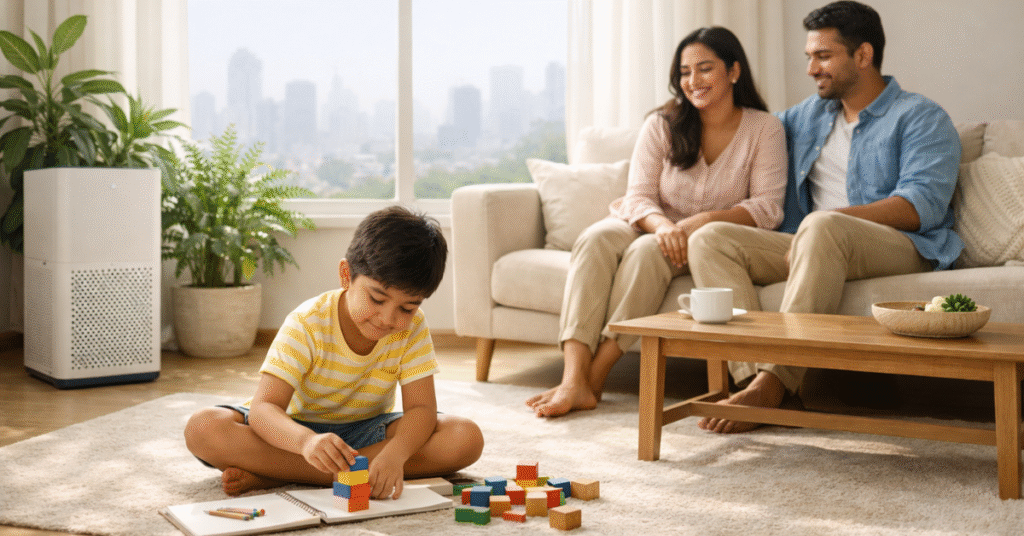
Children are not just smaller adults. Their lungs are still developing, and the tiny air sacs where oxygen exchange happens continue to mature through childhood and adolescence.
They also breathe faster than adults, which means dust, allergens, or irritants in the air are inhaled in higher amounts relative to body size.
Poor indoor air quality often presents as:
- Night-time cough that keeps returning
- Recurrent wheezing
- Daily morning sneezing
- Blocked nose lasting weeks
- Fatigue from poor sleep
- “Frequent colds” that never fully clear
Many parents are surprised when these symptoms are traced back to the child’s bedroom or immediate home environment.
Improving indoor air quality for children is not about fear. It is about awareness and small, consistent corrections that make a real difference.
What Is Polluting the Air Inside Your Home?
Here are the most common sources of indoor pollution in Indian households and practical ways to address them.
1. Dust Mites in Bedding
In warm and humid climates, dust mites thrive in mattresses, pillows, blankets, and soft toys. Invisible to the eye, they are powerful triggers for allergy symptoms. A child who wakes up sneezing every morning is often reacting to dust mite exposure during sleep. For allergy prevention for kids at home, maintaining bedding hygiene is one of the most effective steps.
2. Cleaning That Increases Exposure
Sweeping or dry dusting can re-suspend settled particles, creating a cloud of dust that children inhale. Ensure children are not in the area during cleaning. Prefer damp mopping and damp dusting, using microfibre cloths to trap dust rather than spreading it. Walls are often overlooked, but dust settles vertically as well. Wiping walls two to three times a week with a damp cloth can further reduce airborne particles.
3. Carpets, Curtains, and Soft Toys
Soft surfaces quietly collect dust over time. For children with persistent allergies or asthma, minimize carpets where possible, replace heavy drapes with washable curtains, store stuffed toys in closed boxes, and wash soft toys regularly. Complete elimination is not necessary; reducing accumulation is sufficient.
4. Gas Cooking and Poor Ventilation
Gas stoves release fine particles and gases that can irritate the airways. In small kitchens without proper ventilation, exposure increases. Always use an exhaust fan while cooking, or open windows during and for at least 10 minutes after cooking. Proper ventilation is one of the most overlooked home air pollution control tips.
5. Incense, Candles, and Smoke
Daily use of incense sticks or candles releases fine particulate matter into indoor air. Limit their use indoors if the child has asthma or frequent cough, and ensure proper ventilation. Smoke of any kind inside the home is harmful, with second-hand smoke posing particular risks for growing lungs.
Small, consistent adjustments in these areas can dramatically improve indoor air quality for children.
Air Purifiers: Do They Really Work?
Parents often wonder if air purifiers make a real difference. The answer is yes. Air purifiers do work.
There is no need for the most expensive model. Even entry-level HEPA air purifiers can significantly reduce indoor PM2.5 levels, improving air quality for children. The most effective placement is the child’s bedroom, where they spend the longest continuous hours each day.
For households using air conditioners, adding HEPA-compatible filters can enhance indoor air cleaning. Regular maintenance is important. Filters should be changed every 1 to 3 months during periods of heavy use.
Cleaner air at night often leads to better sleep, reduced respiratory irritation, and fewer symptom flare-ups.
Should Children Wear Masks Indoors?
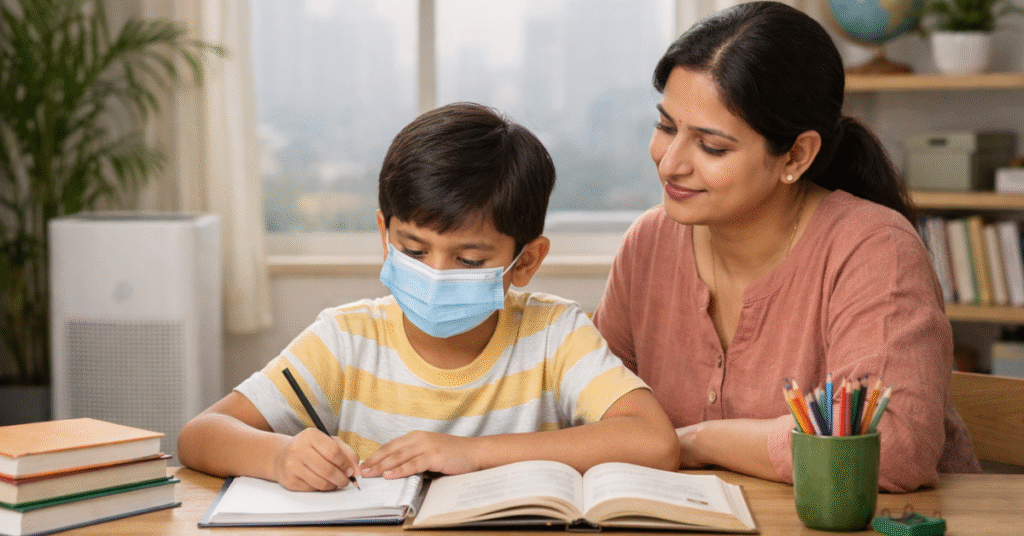
In most homes, if indoor air quality is well controlled, masks are not necessary.
However, during renovation, construction dust exposure, or severe pollution episodes, masks can provide additional protection. Only children above five years should use masks. Choose at least an N95, preferably N99, and ensure a proper fit. Random cloth masks do not filter fine particles effectively.
A Real Consultation Example
A young boy visited the clinic with repeated winter coughs for nearly two years. Each season brought medication, nebulisation, and parental anxiety.
A review of his home environment revealed several triggers: wall-to-wall carpet, thick curtains, multiple soft toys on the bed, and sweeping taking place while he studied in the room.
Small, targeted changes made a significant difference. Mattress encasing, weekly hot-water bedding washes, removing the carpet, adding a HEPA air purifier in the bedroom, and keeping him away during cleaning all contributed to improvement.
Within a few months, his flare-ups reduced noticeably. Sometimes, improving indoor air quality for children can transform the entire pattern of illness.
When Should You Seek Medical Advice?
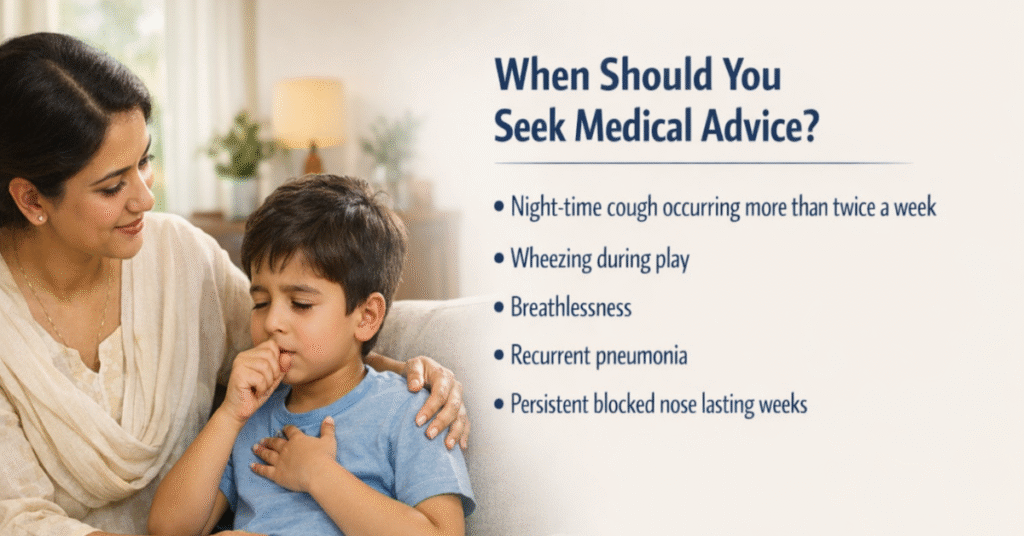
While home adjustments help, certain warning signs should never be ignored:
- Night-time cough occurring more than twice a week
- Wheezing during play
- Breathlessness
- Recurrent pneumonia
- Persistent blocked nose lasting weeks
If symptoms continue despite improving the home environment, a proper pediatric evaluation is essential.
At Vivasvan Parekh Child Care Clinic, respiratory evaluation includes identifying triggers, optimizing asthma management plans, and guiding families on realistic home-based prevention strategies.
Final Thoughts: Small Changes, Stronger Lungs
A perfect home is not required. A mindful home is.
Completely eliminating indoor allergens is unrealistic. Consistently reducing exposure is achievable and effective. Small habits, damp cleaning, weekly bedding washes, proper ventilation, and strategic air purifier use, can meaningfully protect growing lungs.
If a child experiences frequent cough, wheezing, or persistent allergies, these should not be normalized. Early evaluation combined with environmental corrections can change the long-term trajectory. Healthy lungs begin at home, and with the right steps, every family can make a difference.
Take Action
If your child has frequent cough, wheezing, or allergy symptoms, do not ignore the signs. Schedule a respiratory evaluation and personalized home guidance plan at Vivasvan Parekh Child Care Clinic. Early prevention protects growing lungs for life.
Frequently Asked Questions
1. How do I improve indoor air quality for children in apartments?
Focus on bedroom hygiene first. Wash bedding weekly at 60°C, use allergen-proof covers, vacuum with a HEPA filter, ventilate briefly daily, and place a HEPA purifier in the sleeping area.
2. What is the best way to reduce dust and allergens at home?
Use damp dusting instead of dry dusting, keep children away during cleaning, minimize carpets, and maintain clean bedding.
3. Can indoor air pollution cause asthma in children?
Indoor triggers do not always cause asthma directly, but they can worsen symptoms and trigger flare-ups in susceptible children.
4. Do air purifiers help with allergy prevention for kids at home?
Yes. HEPA air purifiers reduce airborne particles and allergens when used consistently and maintained properly.
5. How often should I change AC filters to improve indoor air quality for kids?
Every 1 to 3 months during heavy use, especially in urban environments.
Disclaimer
This article is for general informational purposes only and is not a substitute for professional medical advice, diagnosis, or treatment. Always consult a qualified healthcare provider regarding concerns about your child’s health. For consultation, please visit Vivasvan Parekh Child Care Clinic.

Vivasvan Parekh
As a pediatrician and child specialist based in Mumbai, I bring over 15 years of experience in delivering comprehensive child healthcare. I hold an MD in Pediatrics and practice in Ghatkopar East and Chembur, where I focus on preventive and evidence-based pediatric care. My areas of expertise include vaccinations, newborn care, growth and development monitoring, and the treatment of common and complex childhood illnesses. I am committed to supporting parents with practical, reliable guidance on child health, nutrition, and overall well-being. Through my blog, I share trusted insights on pediatric health, helping parents make informed decisions about their child’s care and development.