
It’s normal for children to complain of stomach pain now and then, but when it keeps happening, it can be worrying. Many parents notice their kids saying their tummy hurts at least once a month, and it’s understandable to feel concerned when it happens often.
Research shows that about 15–20% of school-age children experience recurrent abdominal pain, which can range from mild discomfort to more persistent episodes. Most of the time, it’s nothing serious, but frequent or long-lasting pain should never be ignored.
This guide will help parents understand the common causes, warning signs, and simple ways to manage stomach pain in children, so kids can stay healthy and comfortable while parents feel confident about when to seek help.
What Is Recurrent Stomach Pain in Children?
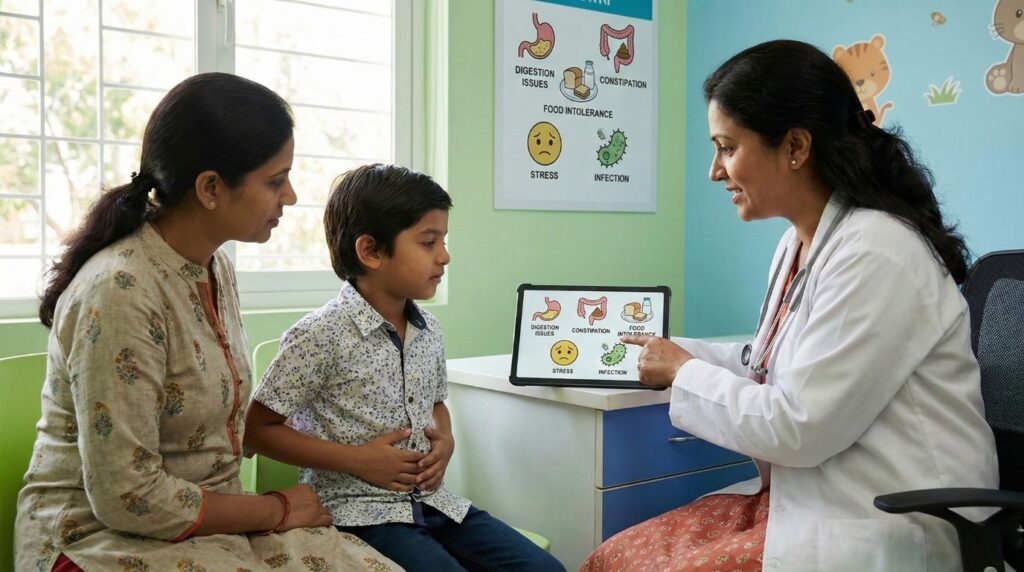
Not every tummy ache is a reason to panic, but recurrent abdominal pain in kids refers to discomfort that comes and goes over weeks or months and may start affecting daily life, school, or play.
It can be tricky to tell whether the pain is from something mild, like gas, constipation, or stress, or if it signals a more serious issue such as a urinary tract infection or a digestive condition. Busy schedules, irregular meals, and stress can make stomach pain worse, but frequent or persistent discomfort should never be ignored, as early attention helps identify the cause and ensures proper care.
Common Causes of Stomach Pain in Children
Understanding the reason behind a child’s tummy aches is the first step toward relief. Several common causes often come up in practice:
1. Functional or Stress-Related Pain
Sometimes stomach pain is linked to stress or anxiety. It can appear before exams, after a long school day, or during busy schedules. These aches are usually mild, vague, and short-lived. Encouraging relaxation, regular meal routines, and plenty of play can help ease discomfort.
2. Constipation
A frequent cause of recurrent stomach pain in kids is constipation. Hard or infrequent stools can cause cramping in the lower abdomen and often improve after a bowel movement. Eating fiber-rich foods, drinking enough water, and maintaining regular toilet habits can make a noticeable difference.
3. Food Intolerance
Some stomach pain happens after eating certain foods. Common triggers include dairy (lactose intolerance), wheat (gluten sensitivity), or eggs and nuts. Symptoms may include bloating, gas, diarrhea, or mild nausea. Keeping a food diary can help identify triggers and prevent repeated discomfort.
4. Gas Pain vs Serious Pain
Gas is a normal part of digestion but can cause discomfort. Gas pain is crampy, intermittent, and often relieved after passing gas. Serious pain is persistent, localized (often in the lower right abdomen), and may come with fever, vomiting, or blood in stool. Recognizing the difference is crucial to know when to seek medical care.
5. Infections
Viral gastroenteritis, or “stomach flu,” can cause sudden cramps, vomiting, diarrhea, and mild fever. Urinary tract infections (UTIs), more common in girls, may cause lower abdominal pain and discomfort while urinating. These usually require medical evaluation and sometimes antibiotics.
6. Irritable Bowel Syndrome (IBS)
Some children experience repeated crampy pain linked to diet, stress, or gut sensitivity. Pain often appears around mealtimes and may ease after a bowel movement. Adjusting diet and managing stress can help reduce symptoms.
Observing patterns, triggers, and frequency allows parents to work with pediatricians to pinpoint the cause, ensuring children remain healthy, active, and comfortable.
When to See a Pediatric Gastroenterologist in Mumbai
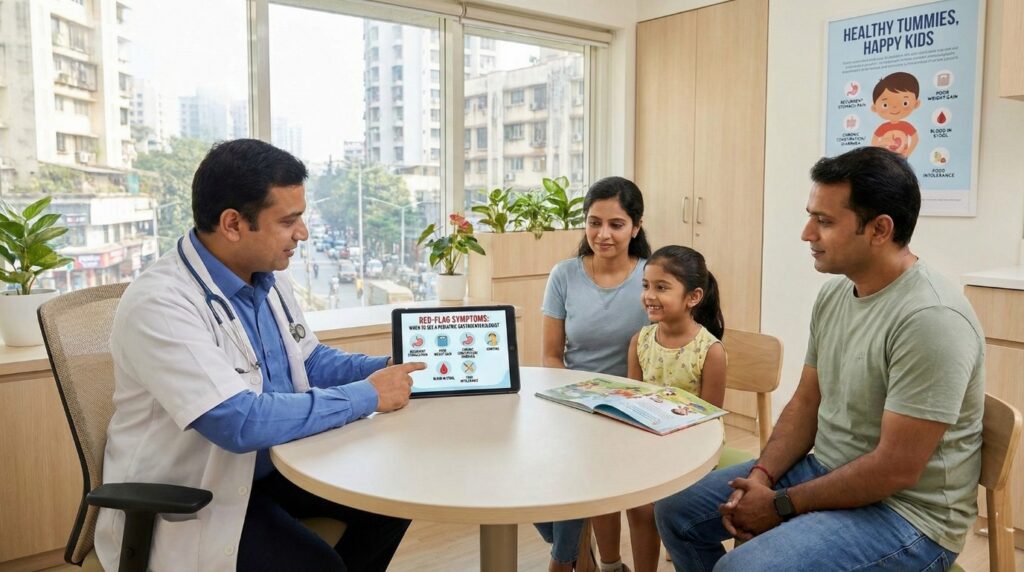
Most stomach aches in children are mild, but recurrent abdominal pain in kids should never be ignored. Parents should consider a specialist visit if a child experiences:
- Severe or worsening pain, especially in the lower right abdomen
- Fever, persistent vomiting, or blood in stool or urine
- Unexplained weight loss or extreme fatigue
- Pain that interferes with sleep, meals, or daily activities
- Children under 3 years with repeated abdominal pain
A pediatric gastroenterologist in Mumbai can perform a detailed evaluation, including physical exams, blood and urine tests, and sometimes an ultrasound. This helps pinpoint the cause, whether it’s constipation, food intolerance, infection, or another underlying issue, and ensures the child receives the most effective treatment plan.
Early consultation not only provides relief but also gives parents peace of mind, knowing that any serious conditions are caught and managed promptly.
At-Home Care for Mild Stomach Pain

For mild stomach pain in children, simple at-home steps can make a big difference:
- Keep your child hydrated with water, coconut water, or mild soups.
- Include fiber-rich foods like fruits, vegetables, and whole grains to ease digestion.
- Identify triggers by observing what foods or situations bring on pain and avoid them temporarily.
- Encourage gentle physical activity, such as short walks or light play.
- Try relaxation techniques to ease stress-related tummy aches.
- Maintain a symptom diary, noting what your child ate, when the pain occurred, and how long it lasted.
These monitoring strategies and small dietary or lifestyle adjustments often help relieve discomfort. However, if symptoms are persistent, severe, or affecting daily activities, professional evaluation is always recommended.
Diagnosis and Treatment
Proper care starts with understanding the pattern of a child’s stomach pain and any related symptoms. A thorough evaluation helps pinpoint the cause and guide treatment.
Common steps in diagnosis may include:
- Blood and urine tests to check for infections, inflammation, or nutritional deficiencies.
- Imaging like ultrasound or X-rays if structural or organ-related issues are suspected.
- Diet modifications to manage food intolerances, lactose sensitivity, or IBS.
- Antibiotics when bacterial infections, such as UTIs or gastrointestinal infections, are confirmed.
- Stress management or behavioral strategies for functional abdominal pain, especially in children dealing with school pressure, tuition stress, or anxiety.
Treatment is highly individualized, tailored to the child’s age, symptoms, and lifestyle. Early evaluation and intervention usually lead to excellent outcomes, helping children return to normal activities, enjoy meals, and feel comfortable throughout the day.
Conclusion
Most cases of stomach pain in children are mild and can be managed at home, but persistent or severe symptoms should never be ignored. Parents should keep track of recurring discomfort, maintain a food and symptom diary, and consult the team at Vivasvan Parekh Child Care Clinic for expert evaluation and guidance.
With the right care, children can recover quickly, return to school and play, and enjoy daily activities without the worry of repeated tummy aches.
Being proactive about recurrent abdominal pain in kids helps safeguard a child’s comfort, growth, and overall well-being. Observing triggers, supporting healthy habits, and seeking timely medical advice from trusted specialists like Vivasvan Parekh is the best way to keep children happy, healthy, and pain-free.
Concerned about your child’s tummy aches? Consult the experts at Vivasvan Parekh Child Care Clinic for personalized evaluation and care.
Frequently Asked Questions
1. What are the most common child stomach pain causes?
Constipation, gas, food intolerances, stress, and mild infections are the most common reasons for tummy aches in children.
2. How can I tell gas pain vs serious stomach pain in my child?
Gas pain is usually crampy, intermittent, and improves after passing gas. Serious pain is persistent, severe, or comes with fever, vomiting, or blood in stool.
3. What are food intolerances in children’s symptoms?
Look for bloating, diarrhea, stomach ache after eating in kids, vomiting, or skin reactions after dairy, wheat, eggs, or nuts.
4. When should I see a pediatric gastroenterologist in Mumbai?
If pain is severe, persistent, or accompanied by fever, blood in stool or urine, weight loss, or disrupted daily activity, a professional evaluation is necessary.
5. Can mild recurrent stomach pain be managed at home?
Yes, with hydration, fiber-rich foods, avoiding triggers, gentle activity, and stress reduction, many mild cases improve. Persistent symptoms need medical attention.
6. How is recurrent abdominal pain diagnosed?
Doctors use physical exams, blood and urine tests, and sometimes imaging like ultrasound to identify the cause and plan the appropriate treatment.

Vivasvan Parekh
As a pediatrician and child specialist based in Mumbai, I bring over 15 years of experience in delivering comprehensive child healthcare. I hold an MD in Pediatrics and practice in Ghatkopar East and Chembur, where I focus on preventive and evidence-based pediatric care. My areas of expertise include vaccinations, newborn care, growth and development monitoring, and the treatment of common and complex childhood illnesses. I am committed to supporting parents with practical, reliable guidance on child health, nutrition, and overall well-being. Through my blog, I share trusted insights on pediatric health, helping parents make informed decisions about their child’s care and development.