
In today’s digital world, screens have become an everyday part of children’s lives. In Mumbai, kids often spend hours on smartphones, tablets, computers, or watching television, whether for online classes, games, videos, or social interaction. Recent studies show that children aged 5–15 spend an average of 3–5 hours per day on screens, and some are already showing early signs of screen addiction.
While technology can be educational and entertaining, excessive screen use can affect sleep, attention, physical activity, and overall development. Parents need to understand what constitutes safe screen time, the potential risks of overuse, and practical strategies to balance digital exposure with healthy habits.
This guide offers expert pediatric advice tailored for Mumbai families, helping parents manage screen time effectively while supporting healthy growth, learning, and well-being.
Understanding Screen Time for Children
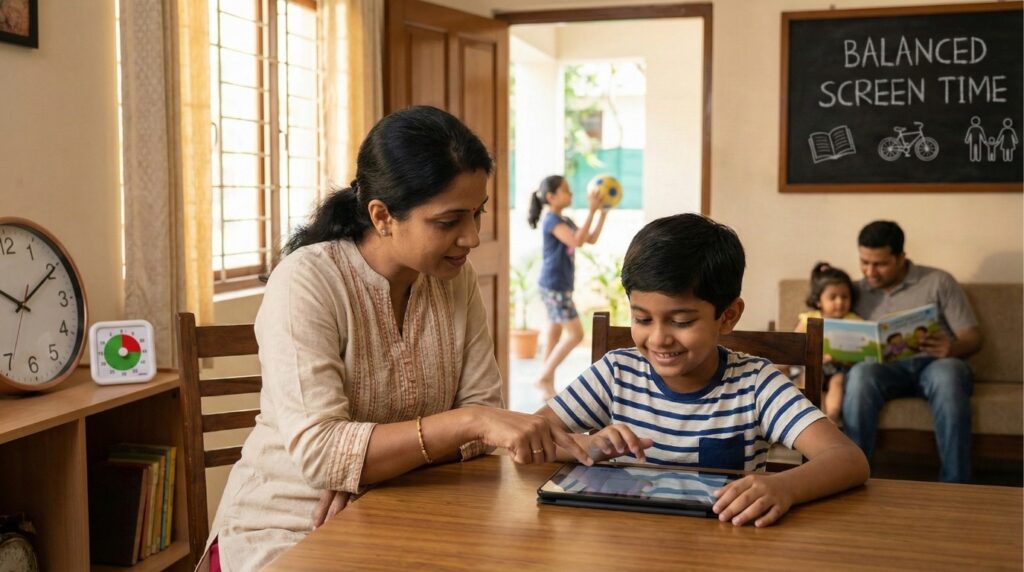
Screen time refers to the hours children spend in front of digital devices such as TVs, tablets, smartphones, and computers. Not all screen time is the same, some of it is educational, like learning apps or online classes, while other use is purely recreational, such as games, videos, or social media. Knowing the difference is important for maintaining balance in a child’s daily routine.
In India, screen time has increased dramatically over the past decade. Digital learning in schools, streaming platforms, entertainment apps, and easy access to mobile phones contribute to children spending several hours a day on screens. In fact, around 61% of children aged 5–15 in urban India now own a smartphone, making screens an almost unavoidable part of daily life.
Despite concerns, limited screen use does have benefits. Educational content can help children learn new concepts, develop problem-solving skills, and boost creativity. Even social connections, like video calls with friends or relatives, can support emotional development, as long as usage is controlled and balanced with other healthy activities.
Effects of Screen Time on Child Development
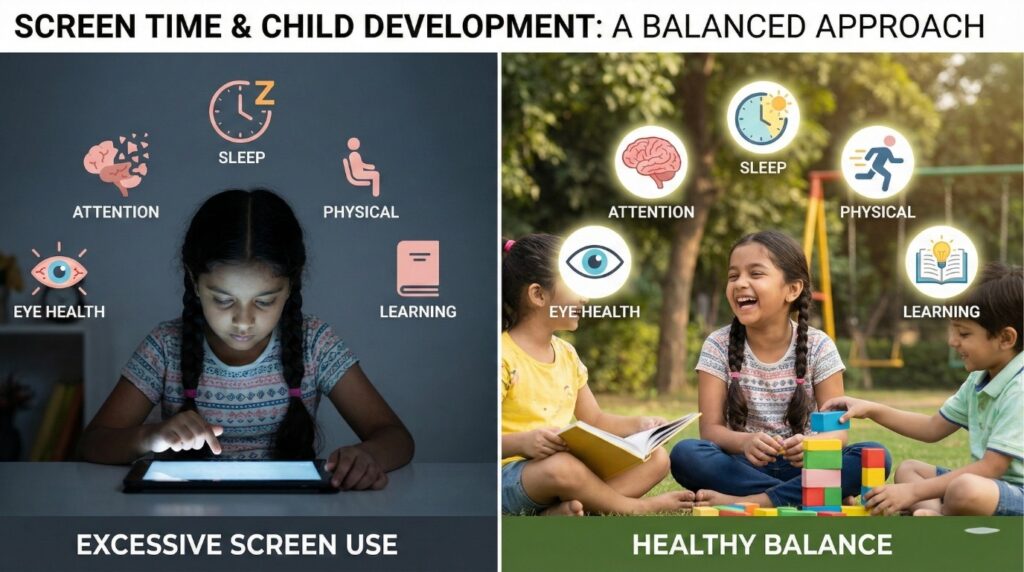
Cognitive & Academic Impacts: Excessive screen use can reduce attention span, making it harder for children to focus on homework or classroom lessons. Language development and problem-solving skills may also be delayed, and prolonged unmonitored screen exposure can contribute to poorer academic performance over time.
Physical Health Impacts: Long hours on screens promote a sedentary lifestyle, increasing the risk of childhood obesity, an issue already rising in urban Mumbai. Eye strain, headaches, and vision problems are common, and exposure to blue light, especially in the evenings, can disrupt sleep, leaving children tired and less attentive the next day.
Social & Emotional Impacts: Heavy screen use can affect social and emotional development. Children may struggle to read social cues, show reduced empathy, and have difficulty resolving conflicts with peers or siblings. Frequent irritability, anxiety, or mood swings are often reported in children spending most of their free time on digital devices rather than interacting socially or playing outdoors.
Behavioral Impacts: Screens can overstimulate the brain, causing meltdowns, aggression, or frustration when devices are removed. Children may prefer passive screen activities over active play and develop a reliance on instant gratification, which can reduce patience, resilience, and engagement in real-world problem-solving.
In a busy city like Mumbai, where long school hours, tuition classes, and limited outdoor space already restrict active play, monitoring and managing screen time carefully is crucial for balanced cognitive, physical, and social development.
Recommended Screen Time by Age
| Age Group | Recommended Screen Time | Key Notes |
| Under 18 months | Avoid screens except video calls | Focus on real-world interaction |
| 18–24 months | High-quality educational content with parental guidance | Encourage co-viewing |
| 2–5 years | Maximum 1 hour/day | Interactive, high-quality programs |
| 6 years and older | Limit recreational screen time, ensure balance with other activities | Prioritize physical activity and homework |
Screen Addiction in Kids: Symptoms to Watch For
Preoccupation with Screens: Children may constantly think about games, videos, or apps, even during meals or while at school. In Mumbai, this can be noticed during long commutes on local trains or in waiting areas, where kids are glued to their phones or tablets.
Irritability or Anxiety When Not Using Devices: Some children become anxious, restless, or irritable if they are asked to stop using a device. Parents often see meltdowns at home when screen time is limited after tuition classes or online learning sessions.
Neglecting Homework or Social Interactions: Excessive screen use can interfere with responsibilities and relationships. Children may delay homework, ignore sibling interactions, or avoid outdoor play in local parks like Shivaji Park or school playgrounds.
Physical Complaints: Eye strain, headaches, or occasional blurred vision are common in children spending long hours on digital devices, especially smartphones and tablets.
Sleep Disturbances: Exposure to screens late at night, common in Mumbai households with evening online classes or entertainment apps, can disrupt sleep routines, leading to fatigue, irritability, and reduced attention the next day.
Mobile Phone Effects on Children
Early Smartphone Use: Children who start using smartphones at a very young age may develop shorter attention spans, making it harder to focus on schoolwork or daily activities. In busy Mumbai households, it’s common to see young kids glued to phones during commutes on local trains or while waiting at tuition centers.
Exposure to Social Media: Social media access can introduce peer pressure, comparison, and anxiety, even in children as young as 10 or 11. Constant exposure to online trends can affect self-esteem and emotional well-being.
Nighttime Usage: Using mobile phones late at night, whether for games, videos, or chatting, can disrupt sleep patterns. In Mumbai, with long school days and evening coaching classes, this often leaves children tired, less attentive, and more irritable the next day.
Impact on Outdoor Activity and Creativity: Heavy mobile phone use reduces time spent on active play or creative activities. Children may skip trips to local parks like Shivaji Park or Aarey Milk Colony, and miss out on developing problem-solving, imagination, and social skills that come from unstructured play.
Managing Screen Time: Pediatrician Advice on Screen Time
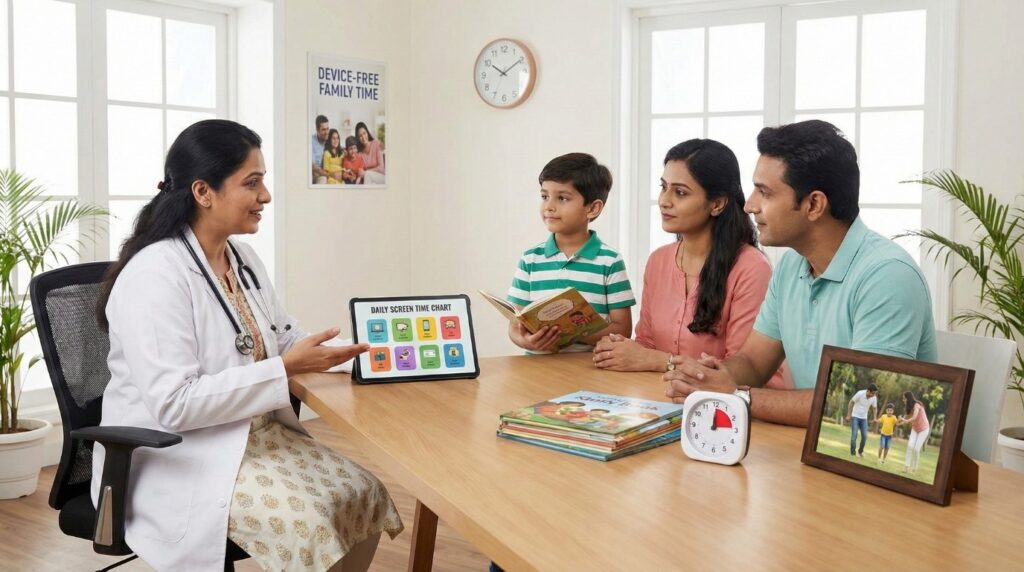
Setting clear, everyday boundaries:
After years of practice, one pattern is very clear, children cope better with screen limits when rules are simple and consistent. Keeping mealtimes screen-free encourages family conversation, while avoiding screens in bedrooms protects sleep. In many Mumbai homes where space is limited, even parking the phone outside the bedroom at night can make a big difference. Parental controls help, but they work best when combined with clear expectations rather than constant policing.
Encouraging healthy, real-world alternatives:
Children don’t give up screens unless something equally engaging replaces them. Regular outdoor play, cycling, football, or free play in nearby grounds like Shivaji Park, Juhu Beach, or society play areas, helps burn energy and improves mood. At home, reading, drawing, craft kits, music, or simple hobbies keep children mentally engaged. Family board games or shared activities during evenings are especially effective in busy Mumbai schedules where quality time often gets squeezed.
Communication and consistency matter most:
Explaining why limits exist helps children accept them better than strict rules alone. When parents model balanced screen use, putting phones away during conversations or family time, children naturally follow. Small rewards for choosing offline activities, like extra playtime or a weekend outing, reinforce positive habits. Over time, this approach builds self-control rather than dependence on constant supervision.
Balanced screen use isn’t about banning technology, it’s about teaching children how to live well with it, even in a fast-paced city like Mumbai.
Conclusion
Screens aren’t the enemy, but too much, too soon can quietly affect a child’s focus, sleep, behavior, and emotional health. For Mumbai parents, the key lies in balance: setting clear limits, spotting early signs of screen addiction, and encouraging active, real-world play alongside digital learning. With the right guidance and timely pediatric support, children can enjoy technology while growing into healthy, confident, and well-rounded individuals.
Concerned about your child’s screen habits? Get expert, practical guidance at Vivasvan Parekh Child Care Clinic, helping Mumbai kids build healthy digital habits.
FAQs Screen Time & Child Development
Q1. What is the recommended screen time for children by age?
Children under 18 months should avoid screens except video calls, ages 2–5 are limited to 1 hour/day, and children 6+ should balance recreational screen use with physical activity.
Q2. What are the main effects of screen time on child development?
Excessive screen time can affect cognitive skills, sleep, social development, behavior, and physical health.
Q3. How can I recognize screen addiction in kids’ symptoms?
Signs include preoccupation with devices, irritability when separated from screens, neglecting homework, and physical complaints like eye strain.
Q4. What are the mobile phone effects on children?
Early smartphone use may reduce attention span, increase anxiety via social media, and disrupt sleep.
Q5. What pediatrician advice on screen time should parents follow?
Set clear limits, avoid screens during meals and bedtime, encourage offline activities, and model balanced screen habits.
Q6. How can parents manage screen time effectively?
Use parental controls, provide alternative activities, maintain open communication, and consistently enforce routines.

Vivasvan Parekh
As a pediatrician and child specialist based in Mumbai, I bring over 15 years of experience in delivering comprehensive child healthcare. I hold an MD in Pediatrics and practice in Ghatkopar East and Chembur, where I focus on preventive and evidence-based pediatric care. My areas of expertise include vaccinations, newborn care, growth and development monitoring, and the treatment of common and complex childhood illnesses. I am committed to supporting parents with practical, reliable guidance on child health, nutrition, and overall well-being. Through my blog, I share trusted insights on pediatric health, helping parents make informed decisions about their child’s care and development.