At a Glance
Most babies tolerate common allergens like peanut, egg, and dairy just fine, and delaying these foods past six months may actually raise allergy risk. Watch for hives, vomiting, or facial swelling within two hours of a new food, introduce one allergen at a time, and always keep early doses small.
- Start allergenic foods around 6 months, alongside other first foods, not after
- Introduce one new allergen at a time, 3–4 days apart
- Give allergens at home, during the day, when help is easily reached
- Watch for hives, facial swelling, repeated vomiting, or breathing changes within 2 hours
- A mild rash around the mouth from contact is usually not a true allergy
- Peanut, egg, dairy, wheat, and cashew cause most infant food allergies
- Call for emergency help immediately if there’s any swelling of the lips or tongue, or difficulty breathing
Introduction
A mother once sat across the desk, phone open to a photo of her seven-month-old’s cheek, red and blotchy after his first taste of scrambled egg. Her question wasn’t really about the rash. It was the same question every parent eventually asks: is this normal, or is something wrong?
Food allergy is often estimated at 6–8% among children in Western and high-income settings, but robust Indian community data are sparse and suggest a much lower burden. Two Karnataka studies estimated probable food allergy at 0.14% in children, whereas sensitisation was detected in 19.1% by serum-specific IgE and 4.48% by skin-prick testing. Because sensitisation does not necessarily mean that eating the food produces symptoms, a positive skin-prick test alone does not confirm food allergy. That gap matters. It means most babies who touch peanuts or eggs will be completely fine, and the real skill for parents isn’t avoidance. It’s knowing how to introduce these foods early, one at a time, and recognising the difference between a harmless rash and a true emergency.
Why Waiting Too Long to Introduce Allergens Can Backfire
Doctors today recommend introducing allergenic foods around six months, not after a reversal of the advice many parents grew up hearing.
For decades, the standard advice was to delay peanut, egg, and other allergenic foods until age one or later, on the theory that a baby’s gut simply wasn’t ready. Then came the LEAP trial, a landmark study that changed pediatric practice worldwide: infants at high risk of allergy who ate peanuts regularly between four and eleven months of age had a dramatically lower rate of peanut allergy by age five, compared to infants who avoided it. Since then, major pediatric bodies including the American Academy of Pediatrics have backed early introduction, generally starting around six months, and as early as four months for higher-risk infants under a doctor’s guidance.
The logic makes sense once explained simply: a baby’s immune system seems to “learn” tolerance through the gut. Skin exposure without eating, say, food residue sitting on a baby’s cheek for hours, may do the opposite, priming the immune system to react. Early, regular feeding appears to teach the body the food is safe.
Navigating family advice at home. This new guidance often collides head-on with what a grandmother learned raising her own children. Ghee massaged on the gums, a few drops of honey for “strength,” or a firm rule to wait until the first birthday for egg, these come from love, not carelessness, and are worth acknowledging as such before gently explaining what current evidence shows. One useful reframe for these conversations: it’s not that older advice was wrong out of neglect, it’s that the science simply didn’t exist yet.
The Usual Suspects: Common Food Allergies in Babies
The foods responsible for most infant reactions are a short, predictable list: cow’s milk, egg, peanut, tree nuts (especially cashew), wheat, soy, fish, and shellfish. In Indian households specifically, cashew shows up more often than people expect, since it’s woven into everyday cooking, from festive sweets to a base for gravies, well before parents think to treat it as a “big” allergen the way peanut is treated.
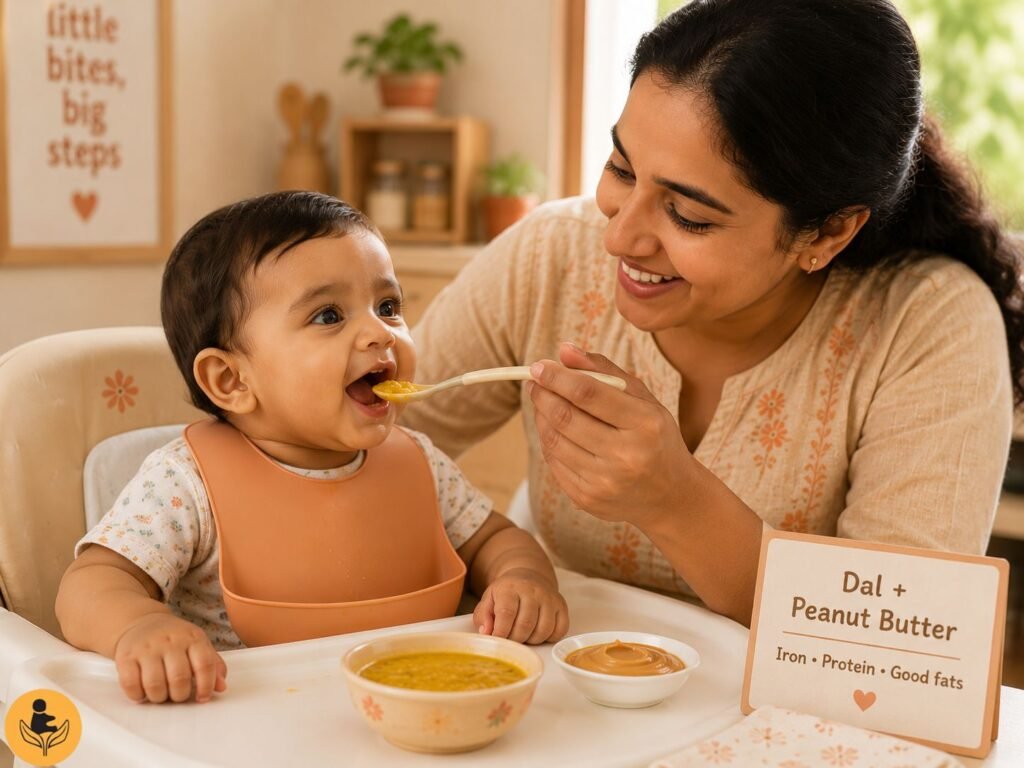
- Peanut allergy in babies is often the one parents fear most, partly because of stories from abroad about severe reactions. In practice, the LEAP trial’s findings apply here too: regular, small exposure from around six months is protective, not risky, for the overwhelming majority of babies. A thin layer of peanut butter mixed into dal or porridge works well as a first exposure, never whole peanuts or nut chunks, which are a choking hazard regardless of allergy status.
- Egg allergy in babies typically shows up as reactions to egg white more than yolk. A well-cooked, mashed hard-boiled egg or a small amount scrambled into a familiar food is a reasonable starting point. Babies with moderate-to-severe eczema carry a higher risk of egg allergy, which is one of the few situations where discussing timing with a pediatrician first is genuinely worthwhile.
- Dairy and wheat allergies are frequently confused with lactose intolerance or general fussiness, which is exactly why the next section matters.
Food Allergy Symptoms in Babies: What’s Normal and What’s Not
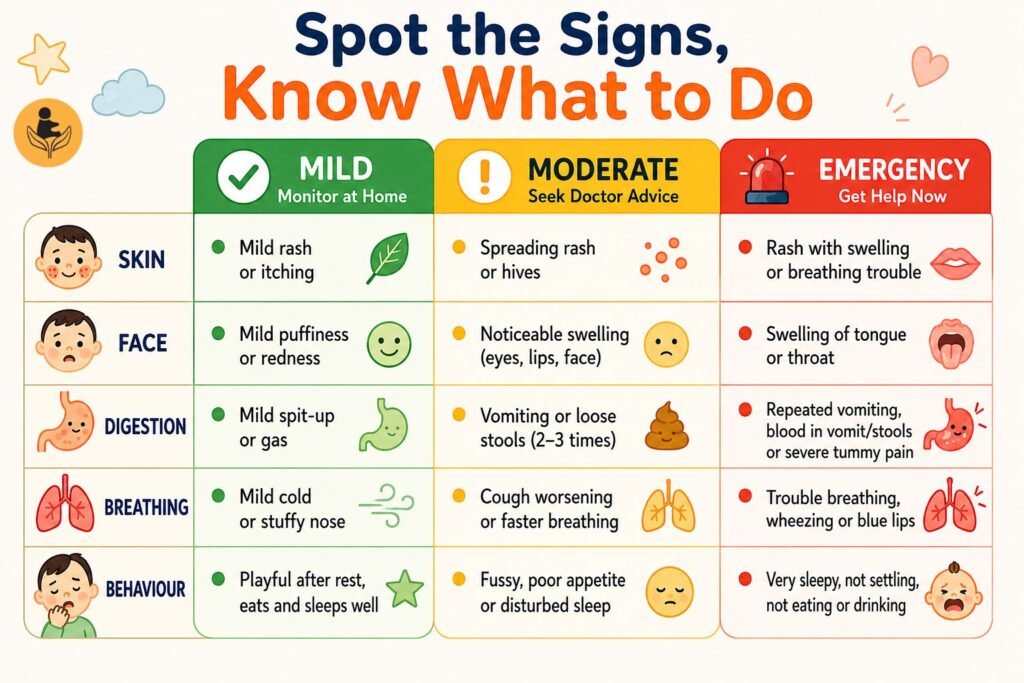
A baby’s allergic reaction to food usually shows up within minutes to two hours of eating, most often as skin symptoms first.
- Mild: A rash confined to the area around the mouth or chin, where food actually touched the skin, this is closer to contact irritation than true allergy, much like a chai spill leaving a temporary mark on skin. Mild fussiness or a single loose stool also falls here.
- Moderate: Hives that spread beyond where the food touched, repeated vomiting, or puffiness around the eyes. This warrants a same-day call to the pediatrician, even if the baby otherwise seems alright.
- Severe (anaphylaxis): Swelling of the lips, tongue, or throat, wheezing or difficulty breathing, sudden paleness, or limpness. This is an emergency, not a “watch and see” situation. Call for emergency help immediately.
Food Allergy vs. Food Intolerance in Babies: Why the Difference Matters
A food allergy and a food intolerance in babies are not the same thing, even though parents often describe both as “he can’t have this.”
An allergy involves the immune system reacting, often quickly and sometimes seriously, to even a small amount of a food. An intolerance is a digestive issue, the body struggles to break down a component of the food, like lactose, and tends to build up gradually with larger amounts, causing gas, bloating, or loose stools rather than hives or swelling. An intolerance rarely needs an allergist; a suspected allergy usually does.
How to Introduce Allergens to Babies Safely: A Step-by-Step Approach
Here’s how to introduce allergens to a baby, one step at a time:
- Wait until the baby is developmentally ready, sitting with support and showing interest in food, generally around six months. If you’re unsure which foods to start with first, follow our general weaning/first-foods guide for a practical Indian month-by-month feeding plan.
- Introduce one new allergen at a time, never mixing two new foods in the same meal.
- Start small, a taste, not a full portion, on the first try.
- Wait 3–4 days before introducing the next new allergen, watching for any delayed reaction.
- Offer allergens at home, during the day, rather than at a restaurant or right before bedtime, so any reaction is easy to catch and act on.
- Keep the food in rotation once tolerated, two to three times a week, since occasional, inconsistent exposure doesn’t build the same tolerance as regular feeding.
Realistic first combinations using everyday staples make this far less intimidating: a smear of peanut butter stirred into warm moong dal, a few drops of well-cooked egg yolk mixed into ragi porridge, or a pinch of besan-based food for babies already tolerating wheat and dairy.
A Quiet but Important Safety Note, Sleep Position During the Weaning Months

Safe sleep guidance doesn’t change once solids begin, though many parents assume it should. Babies should still sleep on their back, on a firm, flat surface, with no loose bedding, pillows, or soft toys, regardless of reflux or fussiness after a feed.
A common myth worth correcting directly: propping a baby upright or placing them on their stomach after meals does not reduce reflux in any meaningful way and removes an important layer of protection against Sudden Infant Death Syndrome (SIDS). If reflux genuinely seems severe, that’s a conversation for a pediatrician, not a reason to change sleep position independently.
When to See a Pediatrician or Allergist
A visit is worth scheduling proactively, not just after a reaction, if there’s a family history of food allergy, eczema, or asthma, since these raise a baby’s own risk. Beyond that, any moderate reaction, or genuine uncertainty about which food caused a reaction, is reason enough to get a professional opinion rather than guessing at home. Routine pediatric visits are also a good time to review vaccination schedules, growth, eczema, and other factors that may influence allergy management.
Baby Food Allergy Symptoms at a Glance
| Symptom | Likely Mild Reaction | Needs a Doctor Visit | Needs Emergency Care Now |
| Skin | Rash only where food touched | Hives spreading beyond mouth | Hives all over body |
| Face | Slight redness around lips | Puffiness around eyes | Swelling of lips, tongue, or throat |
| Digestion | One episode of loose stool | Repeated vomiting | Vomiting with lethargy or pale skin |
| Breathing | Normal | Slight sniffles or cough | Wheezing, gasping, or breathing difficulty |
| Behaviour | Mild fussiness | Persistent crying, poor feeding | Sudden limpness or unresponsiveness |
| What to do | Watch and note the food | Call the pediatrician same day | Call emergency services immediately |
Moving Forward, One Small Bite at a Time
Three things matter more than anything else on this journey: one allergen at a time, small amounts to start, and two hours of watching afterward. Most babies handle peanut, egg, and dairy without any trouble at all, the goal isn’t to eliminate every risk, since that isn’t possible, but to introduce these foods in a way that’s genuinely protective rather than fearful.
A short conversation before the first spoonful of peanut butter can save a lot of 2 a.m. worry. The team at Vivasvan Child Care Clinic is glad to walk through a personalized weaning and allergy-risk plan, particularly useful for families with a history of allergies, eczema, or asthma. Booking a consultation takes a few minutes and can turn a nerve-wracking first year of feeding into a far calmer one.
Book a consultation with our pediatric team for a personalised weaning and allergy-risk plan.
Frequently Asked Questions
The first sign is usually a rash around the mouth or hives appearing within minutes to two hours of eating a new food. Watching closely during and after the first few exposures makes it easy to catch early.
It’s best to introduce them on separate days, spaced 3–4 days apart, so that if a reaction occurs, it’s clear exactly which food caused it.
Yes, current pediatric guidance recommends introducing allergens like peanut and egg around six months, alongside other first foods, rather than waiting until after the first birthday.
A food allergy involves the immune system and can appear suddenly, sometimes seriously, even with a small amount of food. A food intolerance affects digestion, builds up gradually, and rarely needs an allergist.
Stop the food immediately, note exactly what was eaten and how the baby reacted, and contact the pediatrician the same day, unless there’s swelling of the lips or tongue or any difficulty breathing, in which case emergency services should be called right away.

Vivasvan Parekh
As a pediatrician and child specialist based in Mumbai, I bring over 15 years of experience in delivering comprehensive child healthcare. I hold an MD in Pediatrics and practice in Ghatkopar East and Chembur, where I focus on preventive and evidence-based pediatric care. My areas of expertise include vaccinations, newborn care, growth and development monitoring, and the treatment of common and complex childhood illnesses. I am committed to supporting parents with practical, reliable guidance on child health, nutrition, and overall well-being. Through my blog, I share trusted insights on pediatric health, helping parents make informed decisions about their child’s care and development.